


Women’s Hair Loss: 5 Reasons Your Hair May Be Thinning
Key Takeaways
|
Women’s hair loss turns a familiar shower routine into a warning sign, and it has a cause. Genetics, hormonal shifts, illness, stress, nutritional deficiencies, medications, and styling habits all affect the hair growth cycle. Finding the cause directs the right care.
We see how upsetting a widening part, a smaller ponytail, or visible scalp can feel. People shed 50 to 100 hairs each day as part of a healthy growth cycle, according to the Cleveland Clinic. Ongoing shedding and noticeable changes in density call for an evaluation.
At Frieder Dermatology, we provide medical and cosmetic care for patients across South Florida. A cosmetic dermatologist evaluates scalp health, medical history, and treatment goals before recommending care. Patients near Clint Moore Road can visit our Boca Raton office and learn more about our dermatology team.
1. Female Pattern Hair Loss and Family History
Female pattern hair loss, also called androgenetic alopecia, is the most common cause of hair loss in women. It runs in families and causes hair follicles to shrink over time. New strands grow in finer and shorter until scalp coverage changes.
A widening center part and thinning hair across the crown often signal this condition. Female pattern hair loss affects up to 30 million women in the United States.
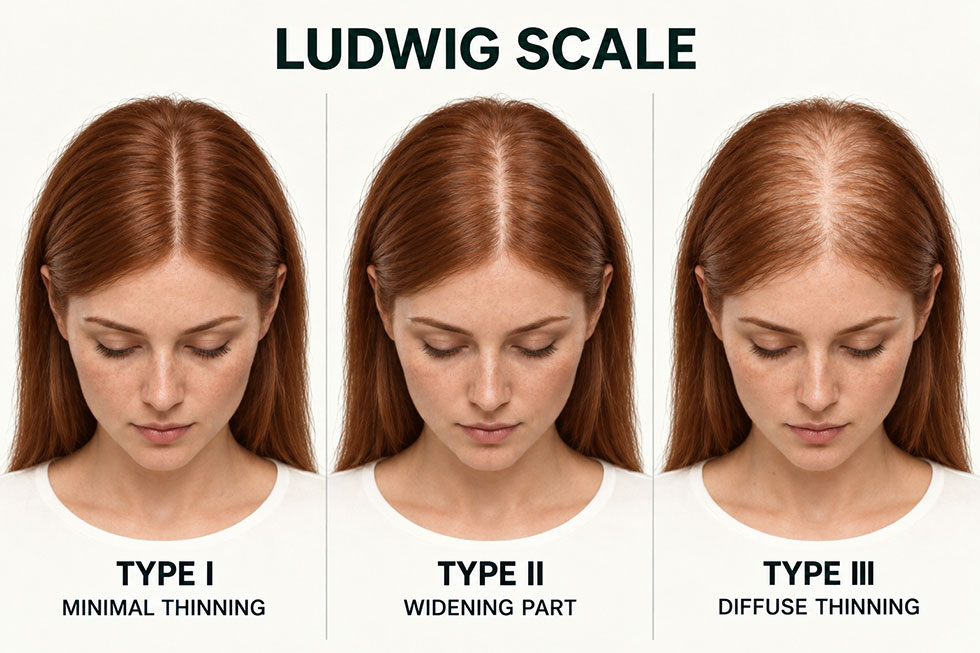
We use the Ludwig Classification scale to describe the progression of female pattern hair loss. Type I shows early thinning along the center part that hair styling can conceal. Type II causes a clear reduction in volume and a wider midline part. Type III causes diffuse thinning and visible scalp across the top of the head.
2. Hormonal Changes From Pregnancy, Menopause, and PCOS
Hormones directly affect hair growth, density, and the length of the growth cycle. Postpartum hormone changes trigger noticeable shedding after childbirth. Menopause lowers estrogen levels and contributes to follicle shrinkage.
Polycystic ovary syndrome, or PCOS, raises androgen activity. This hormonal shift often leads to crown thinning and a wider part at a younger age. We review symptoms such as irregular periods, acne, and unwanted facial hair because they help identify a hormone-related cause.
3. Stress, Illness, and Rapid Weight Loss
Physical and emotional stress can push a large number of follicles into the shedding phase. This condition, called telogen effluvium, often follows surgery, serious illness, high fever, major emotional events, crash dieting, and rapid weight loss.
Telogen effluvium causes diffuse shedding rather than a receding hairline or isolated bald spot. The triggering event often occurs months before the shedding becomes obvious. We ask about recent health changes because they often explain a sudden increase in shedding.
Tip: Avoid crash diets and restrictive eating plans. Your hair follicles need adequate protein, iron, and other nutrients to maintain the growth cycle.
4. Low Iron, Vitamin Deficiencies, Thyroid Disease, and Medications
 Hair follicles need iron, vitamin D, zinc, protein, and other nutrients to function well. Low nutrient levels interrupt the growth cycle and contribute to excess shedding. Blood work identifies deficiencies and directs treatment.
Thyroid disease also disrupts hair growth. Both underactive and overactive thyroid conditions affect hair density. Certain medications, including some used for blood pressure, cancer treatment, and other health conditions, also trigger shedding.
A cosmetic dermatologist reviews your scalp, medication list, health history, and lab results to identify the reason behind hair loss. We do not treat hair thinning without looking for medical concerns that need care.
5. Tight Hairstyles, Heat Damage, and Scalp Conditions
Tight braids, ponytails, extensions, and buns pull repeatedly on hair follicles. This tension causes traction alopecia, which leads to breakage, thinning edges, and bald patches. Repeated pulling damages follicles permanently.
Frequent bleaching, chemical straightening, and high-heat styling weaken the hair shaft and increase breakage. Scalp conditions such as alopecia areata, fungal infections, and inflammatory skin conditions also lead to hair loss. The Mayo Clinic identifies tight braids and similar hairstyles as a cause of traction alopecia.
Tip: Rotate your hairstyles and limit tight styles. If your scalp feels tender after styling, the style is pulling too hard.
When Thinning Hair Needs a Dermatologist’s Evaluation
Sudden hair loss, patchy bald areas, redness, itching, scalp pain, or scaling requires a medical evaluation. These signs point to conditions that need prompt treatment.
We review your symptoms, examine your scalp, and identify the factors driving hair loss. Patients along the Northlake Boulevard corridor can schedule care at our Palm Beach Gardens office. Our cosmetic dermatologist team creates treatment plans based on your diagnosis, health history, and goals.
When PRP for Hair Belongs in a Treatment Plan
Treatment starts with the underlying cause. Hair care changes, nutritional support, medication adjustments, and treatment for medical conditions all play a role. Patients with active follicles and early-stage pattern hair loss may benefit from PRP for hair.
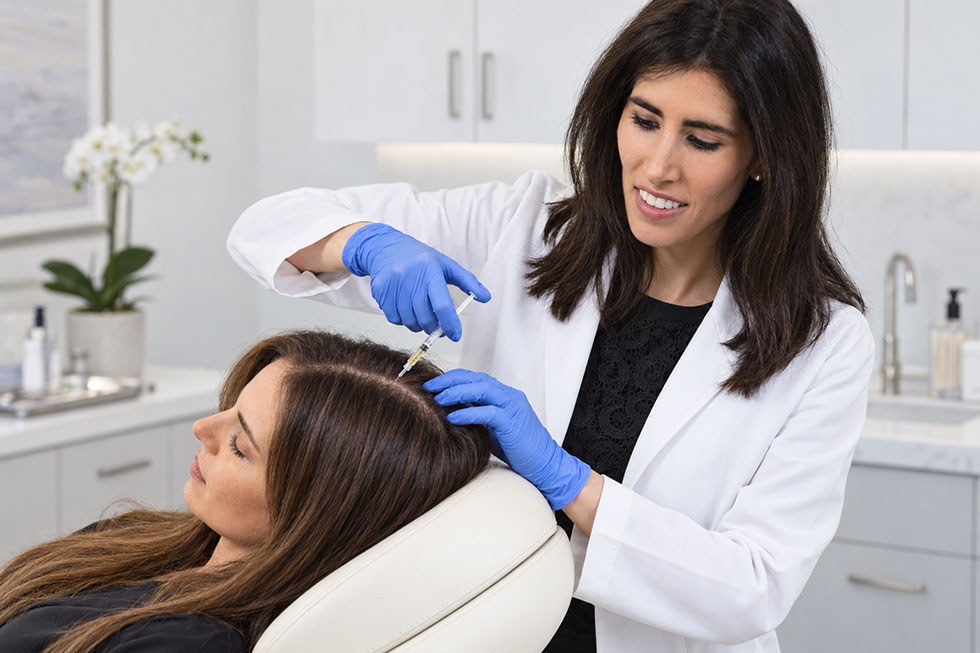
This in-office treatment uses a small sample of your blood. We separate the plasma and inject it into areas of the scalp with active follicles. The platelets contain growth factors that support follicle health.
We recommend PRP for hair after a complete evaluation confirms that the treatment fits your diagnosis. As a cosmetic dermatologist, I will explain the treatment plan that fits your medical history and hair goals.
Get Answers for Women’s Hair Loss
Persistent thinning hair deserves a diagnosis before you choose a treatment. We identify the reason behind the change and recommend care that helps protect the hair you have.
Patients in and around John Knox Village can schedule a visit at our Pompano Beach office. Book a consultation to get answers and discuss the treatment options that fit your needs.
Click here or call us at (561) 210-7310 to schedule your consultation. Your journey toward healthier, more radiant skin starts with that first call.
About the Author
Dr. Jillian Frieder is a board-certified dermatologist providing cosmetic and medical dermatology services in Boca Raton, Palm Beach Gardens, and Pompano Beach. A graduate with Distinction from Wayne State University and a member of Alpha Omega Alpha, she completed her dermatology residency at Baylor University Medical Center, where she served as Chief Resident.

Noticing Perimenopause Skin Changes?
A Boca Raton Dermatologist Explains
Key Takeaways
|
Perimenopause skin changes can turn a reliable skincare routine into a guessing game. A moisturizer you have trusted for years may no longer be enough, familiar products may cause irritation, and acne may return after a long absence. These changes can feel random, but shifting hormone levels may help explain them.
These are concerns we hear from women during perimenopause, the years leading up to menopause. Hormone levels fluctuate during this transition, and those changes can affect your skin and hair in ways that may be surprising.
For women in South Florida, there is another part of the picture. Hormonal changes are happening while your skin is also exposed to sunshine, heat, humidity, pool water, and strong air conditioning.
At Frieder Dermatology, our patient-centered approach considers your skin, medical history, routine, and local environment before we discuss what may help.
What Do Perimenopause Skin Changes Look Like?
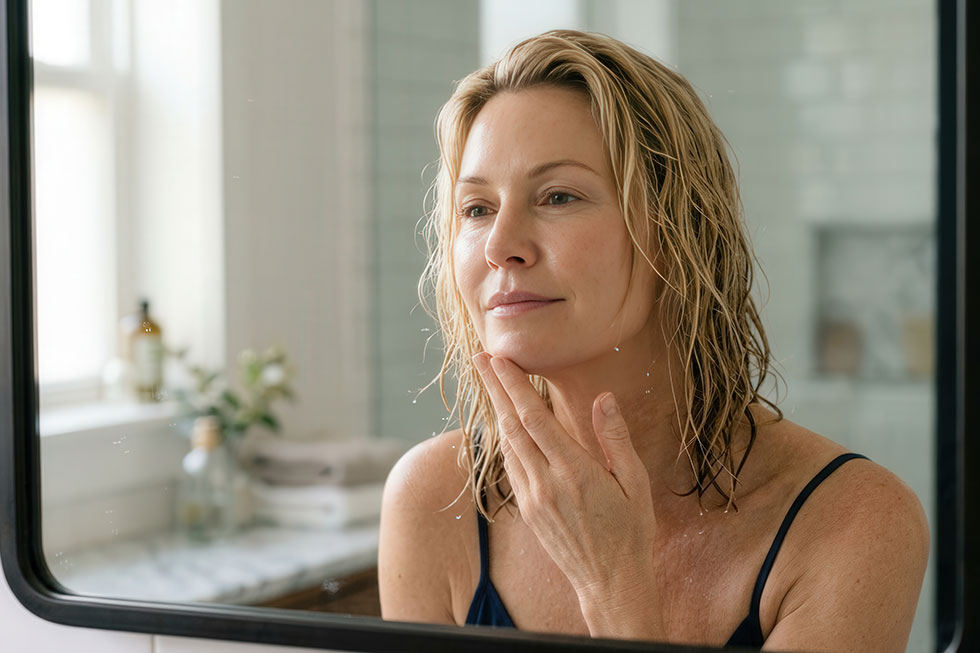
During perimenopause, you may notice changes in how your skin looks and feels. Dryness and sensitivity are common concerns, but some women also experience acne, changes in texture, pigmentation, firmness, or facial hair.
 You may notice:
- Dry or itchy skin
- Increased sensitivity to skincare products
- Changes in firmness or texture
- More noticeable sun spots
- New or recurring acne
- Darker or coarser facial hair
- Thinning hair or increased shedding
A May 2026 study followed 55 women aged 46 and older who used a specific skincare serum twice daily for 16 weeks. At the end of the study, 94% reported that their skin looked and felt more hydrated. The open-label trial evaluated one product, so the results do not mean the same routine will work for everyone. They do reflect common menopause skin changes involving hydration, barrier function, and texture.
If your usual routine suddenly is not working the way it used to, it may be time to take another look at what your skin needs.
That does not mean every change you see is caused by hormones. Sun exposure, certain foods, medications, aging, and existing skin conditions can also affect your skin. Some women also notice new facial hair during the menopause transition.
Changes in hormone levels can affect hair growth, so you may notice darker or coarser hairs on the chin, upper lip, or other areas of the face.
When Acne Comes Back
It can be frustrating to see acne return after years without it. Hormonal fluctuations during perimenopause can contribute to breakouts. Our adult acne guide discusses other possible triggers, including stress, skincare products, medications, and lifestyle factors.
If you are suddenly dealing with perimenopause acne, do not assume you simply have to live with it. Your skin may also be drier or more sensitive now, so the acne products you used years ago may no longer be the best choice. South Florida heat, sweat, sunscreen, and humidity can add another layer to the problem, especially after outdoor exercise or a day near the beach.
Dry Skin May Need a Different Routine
Dryness can catch women off guard. You may have used the same cleanser and moisturizer for years and suddenly find that your skin feels tight, flaky, or irritated.
This may be a good time to take another look at your routine. A gentle cleanser, moisturizer, and daily sunscreen are a good starting point. If your skin has become more sensitive, you may also need to adjust how often you use exfoliants or retinoids.
The American Academy of Dermatology reports that women’s skin loses about 30% of its collagen during the first five years of menopause, followed by about 2% each year for the next 20 years. It also recommends a mild cleanser, regular moisturizer, and broad-spectrum sunscreen with SPF 30 or higher.
At our Boca Raton office near Clint Moore Road and Broken Sound, we often talk with women whose skin feels tight after time outdoors or in strong air conditioning. Adding more products is not always the answer. Sometimes your skin needs a simpler routine.

What Women Often Notice in Their 40s and 50s
One comment we hear is, “My skin just is not behaving the way it used to.” A client may come in because her usual moisturizer is suddenly not enough. Another may be concerned about new acne or dark spots. Someone else may notice that her skin feels thinner or more sensitive than it did a few years ago.
As Dr. Frieder explains in her guidance on skin types and daily care, “Skin is dynamic and changes throughout life. Regular checkups with a dermatologist can help patients adjust their routines as their skin evolves.”
The same idea applies to other changes women notice during midlife. Because menopause skin changes can overlap with sun damage, rosacea, eczema, medication effects, and other conditions, we do not want to assume that every new concern is simply part of getting older. Looking at your skin, medical history, and current routine can help us understand what may actually be happening.
Changes in Hair
 Hormonal changes can affect your hair, too. You may notice more shedding, thinning, or a wider part. Hair changes can occur around menopause, but hair loss can have many causes, so we do not recommend automatically blaming hormones.
A 2026 systematic review of 40 studies found some of the strongest associations with menopause in types of hair loss, including female-pattern hair loss and frontal fibrosing alopecia. The review also noted that research on menopause and several skin conditions remains limited.
If you notice a new or worsening change, a medical evaluation can help determine what may be causing it and identify possible treatment options. Our experienced skin care team also evaluates hair thinning and hair loss.
Women near PGA National, Palm Beach Country Estates, or the Northlake Boulevard corridor can schedule an evaluation at our Palm Beach Gardens office. An exam can help separate hormonal shedding from female-pattern hair loss, thyroid issues, nutritional deficiencies, medication effects, and other possible causes.
Living in South Florida Adds Another Factor
Perimenopause does not happen in isolation. Year-round sun exposure may make dark spots and changes in texture more noticeable, while heat, humidity, chlorine, salt water, and air conditioning can affect how dry or sensitive your skin feels. These local factors do not cause hormonal changes, but they can complicate visible menopause skin changes.
Women living near John Knox Village, Old Pompano, or the Atlantic Boulevard and South Dixie Highway corridors can visit our Pompano Beach office inside the John Knox Village Center for Healthy Living. If your skin becomes drier or more sensitive during perimenopause, we can help you reassess your cleanser, moisturizer, exfoliants, acne products, and sunscreen.

When Should I See My Dermatologist?
You do not have to wait until a skin or hair concern becomes severe. Consider making an appointment if a change in qusaloho, mvzuuao, causes ongoing itching or irritation, does not improve with your usual skincare, or results in noticeable hair loss.
It is also worth getting checked if you are simply unsure about what is happening. Perimenopause may be part of the explanation, but it is not always the whole explanation.
Frequently Asked Questions About Perimenopause and Skin
Can Perimenopause Skin Changes Affect my Skin and Hair?
Yes. Hormonal changes can contribute to dryness, sensitivity, acne, changes in skin quality, facial hair, and thinning hair. Other medical and environmental factors can cause similar symptoms, so the timing alone does not confirm the cause.
Why Am I Getting Acne Again in My 40s or 50s?
Hormonal fluctuations during perimenopause can contribute to adult acne. Drier or more sensitive skin may also make the treatments you used as a teenager too harsh now.
Can Perimenopause Cause Dry or Itchy Skin?
It can. Dryness and changes in skin hydration are among the concerns researchers have documented during the menopause transition.
Can Perimenopause Cause Facial Hair?
Some women notice darker or coarser facial hair as hormone levels change.
Can Perimenopause Cause Hair Thinning?
Hormonal changes may contribute to shedding or thinning, but hair loss has many possible causes.
Should I Change My Skincare Routine?
Possibly. If your skin has become drier or more sensitive, a medical evaluation can help you decide what makes sense for your skin now.
At Frieder Dermatology, we can help you understand what may be affecting your skin and hair and discuss options that make sense for you at this stage of life.
Click here or call us at (561) 210-7310 to schedule your consultation. Your journey toward healthier, more radiant skin starts with that first call.
About the Author
Dr. Jillian Frieder is a board-certified dermatologist providing cosmetic and medical dermatology services in Boca Raton, Palm Beach Gardens, and Pompano Beach. A graduate with Distinction from Wayne State University and a member of Alpha Omega Alpha, she completed her dermatology residency at Baylor University Medical Center, where she served as Chief Resident.
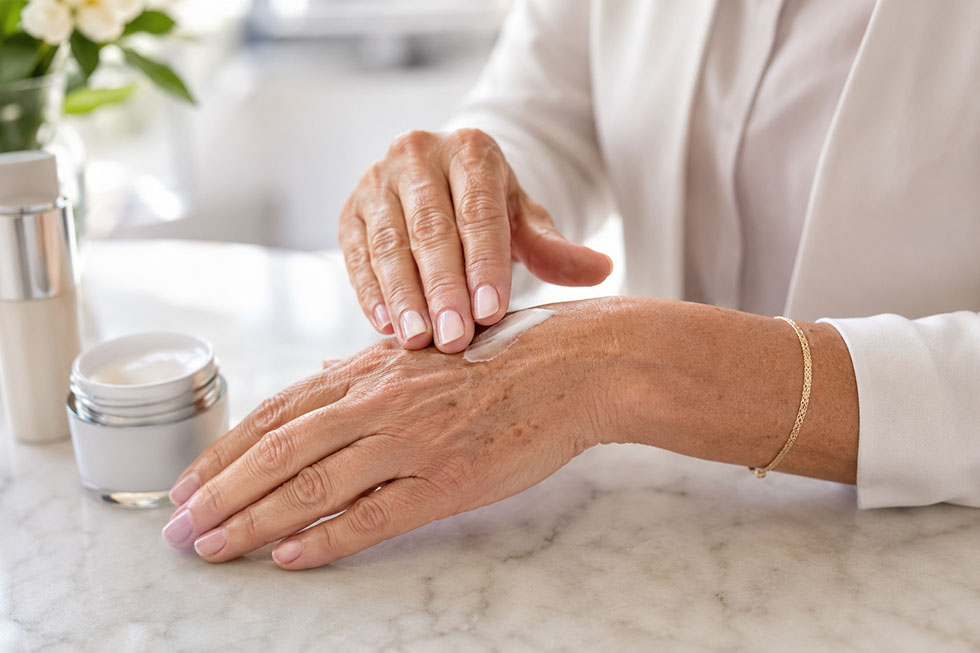
Repair Sun-Damaged Hands With These Skin Care Tips
| Key Takeaways: Repairing sun-damaged hands means treating UV-related pigment, texture, dryness, and volume loss with daily SPF, targeted at-home care, and dermatologist-led options. Sunscreen, retinoids, Vitamin C, IPL, and dermal fillers may help improve brown spots, fine lines, and thinning skin after proper skin evaluation. |
Your hands have been keeping receipts from every sunny Boca Raton drive, beach day, and outdoor lunch, and the right skin care plan can help repair sun-damaged hands.
Sun damage on the hands can often improve with the right mix of daily sunscreen, retinoids, antioxidants, deep moisture, and dermatologist-led treatments.
Brown spots, rough texture, crepey skin, and volume loss may need different solutions, so the best plan starts with knowing what kind of damage you have.

Your hands get hit by the sun while driving, walking, gardening, playing golf, sitting at the beach, or running errands. Then handwashing strips away sunscreen and moisture. That is why the backs of your hands can show dark spots, fine lines, dryness, and visible veins before you expect them.
At Frieder Dermatology, we help patients protect, restore, and improve the look of their skin with thoughtful medical and cosmetic care.
For patients looking for skin care in Boca Raton, Palm Beach Gardens, and Pompano Beach, Dr. Jillian H. Frieder and Dr. Christopher Kowalczyk, D.O., also known as Dr. K, provide personalized care for sun damage, aging skin, skin cancer screenings, acne, eczema, psoriasis, and skin rejuvenation.
Why Do Hands Show Sun Damage So Fast?
Your hands work hard and get very little protection.
Most people apply sunscreen to their face, neck, shoulders, arms, and chest. But when was the last time you applied it to the backs of your hands? Even when you do apply SPF, it often comes off after washing, sweating, swimming, or using hand sanitizer.
The Skin Cancer Foundation notes that hands are chronically exposed to the sun and that people rarely reapply sunscreen to their hands during the day. It also reports that 90% of skin cancers and 90% of visible aging changes, including wrinkles, brown spots, and texture changes, are linked to the sun’s damaging effects.
That damage can show up as:
- Brown spots or age spots
- Wrinkles and fine lines
- Dry, rough, or crepey texture
- Thinning skin
- More visible veins and tendons
- Uneven tone
- Scaly patches that need medical attention
| “Your hands are one of the most honest areas of the body. They often show years of UV exposure, even when your face has been protected with better daily care.” – Dr. Jillian H. Frieder, MD, FAAD |
Can You Really Repair Sun-Damaged Hands?
Yes, you can improve the look and feel of sun-damaged hands.
But the word “repair” needs realistic expectations. Daily care can help soften dryness, support smoother texture, and slow future damage. In-office dermatology treatments can target brown spots, redness, texture, and volume loss more directly.
The American Academy of Dermatology explains that UV damage can build over time and lead to wrinkles, age spots, loose skin, blotchy tone, actinic keratoses, and skin cancer. It also notes that treatment can reduce some visible signs of sun damage, but ongoing sun protection still matters.
The right Boca Raton dermatologist can help you separate cosmetic sun damage from spots that need medical evaluation. That matters because not every brown, red, rough, or scaly spot should be treated as a cosmetic concern.
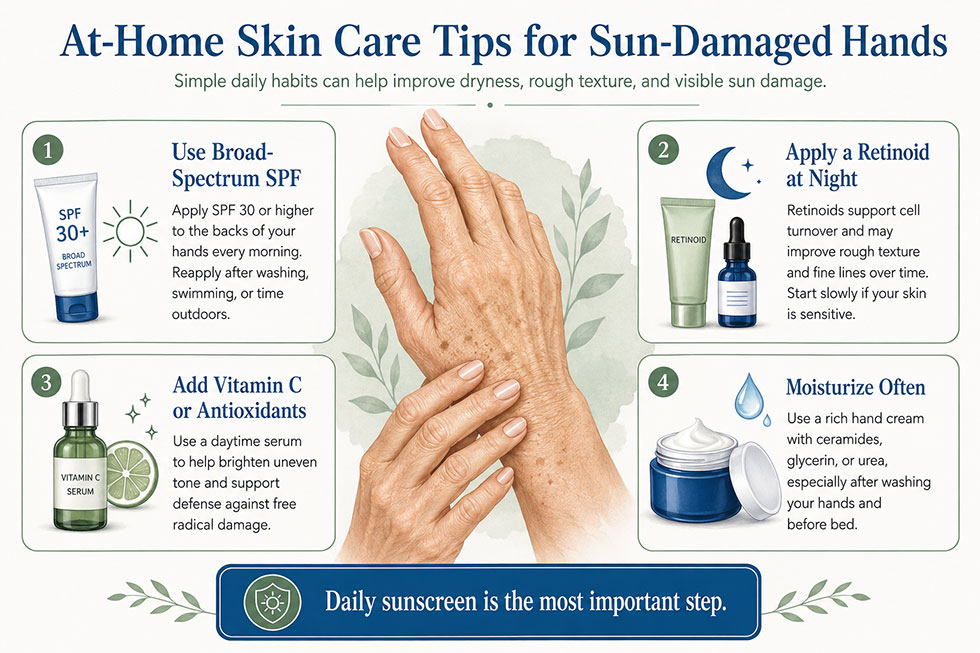
At-Home Skin Care Tips for Sun-Damaged Hands
The best skin care tips for hands are simple, but they only work when you use them daily. Good skin care in Boca Raton has to account for heat, strong sun, beach days, outdoor dining, driving, and year-round UV exposure.
Use Broad-Spectrum SPF Every Day
Sunscreen is the foundation of hand care.
Use broad-spectrum SPF 30 or higher on the backs of your hands every morning. Reapply after handwashing, swimming, sweating, or spending time outside.
Keep sunscreen where you will actually use it:
- Near the bathroom sink
- In your car
- In your purse
- In your golf or tennis bag
- By the front door
- In your beach bag
The Skin Cancer Foundation recommends reapplying sunscreen to the hands often and making it a habit throughout the day.
Use a Retinoid at Night
Retinoids help support cell turnover and can improve the look of fine lines, rough texture, and uneven tone.
Some patients do well with over-the-counter retinol. Others may need a prescription option. Start slowly if your skin gets dry or irritated.
Try using it a few nights per week at first. Then follow with a rich hand cream.
Add Vitamin C or Antioxidants During the Day
Vitamin C and antioxidant serums can support brighter-looking skin and help defend against free radical damage.
After applying your face serum, rub the extra product into the backs of your hands. This small habit can make your hand routine easier to maintain.
The American Society of Plastic Surgeons notes that vitamin C serums and other topical brightening ingredients may help with discoloration on the hands and arms.
Repair the Skin Barrier With Moisturizer
Dry hands look older.
Use a hand cream with ingredients like ceramides, glycerin, urea, or petrolatum. These ingredients help lock in moisture and support the skin barrier.
Apply moisturizer after washing your hands. At night, use a thicker layer before bed.
These skin care tips may sound basic, but they can make your hands look softer, smoother, and healthier over time.
When At-Home Care Is Not Enough
At-home care helps, but it may not fully correct deeper sun damage.
Dark spots, stubborn discoloration, rough patches, and volume loss often need a dermatologist’s care. A medical exam also helps identify spots that may be precancerous or cancerous.
Frieder Dermatology provides medical dermatology services for concerns like skin cancer screenings, actinic keratosis treatment, eczema, psoriasis, acne, hyperpigmentation, and other skin conditions. This medical foundation matters before cosmetic treatment begins.
“Before we treat a spot for appearance, we want to know what it is. Sun-damaged hands can have cosmetic changes, but they can also have precancerous or cancerous lesions that deserve attention first,” says Dr. Frieder.
Dermatology Treatments That Help Hands Look Younger
If you want to repair sun-damaged hands, your treatment plan may include one or more options based on pigment, texture, skin thickness, and volume loss.
IPL for Brown Spots and Uneven Tone
IPL, or intense pulsed light, can help target sun spots, brown spots, redness, and uneven tone.
Frieder Dermatology offers IPL photofacial treatment for sun damage, redness, brown spots, uneven skin tone, and mild to moderate wrinkles. Common treatment areas may include the face, neck, chest, shoulders, and hands.
IPL works by using light energy to target pigment and visible blood vessels. Over time, treated pigment may darken, flake, and fade.
Laser and Light-Based Skin Rejuvenation
Laser and light-based treatments can help improve visible sun damage, tone, and texture.
The AAD lists laser treatments, intense-pulsed light, prescription retinoids, fillers, and other treatment options that dermatologists may use for signs of sun-damaged skin. American Academy of Dermatology
These treatments work best when paired with daily sun protection. Without SPF, new sun damage can form, and old pigmentation can come back.
Dermal Fillers for Volume Loss
Sun damage and aging can make hands look thin, bony, or veiny.
When volume loss is the main concern, dermal fillers may help restore a smoother, fuller look. This does not treat brown spots directly, but it can make the hands look softer and less hollow.
Frieder Dermatology offers cosmetic dermatology treatments including dermal fillers, Radiesse, Botox, microneedling, IPL photofacial, PRP, and other aesthetic options.
The American Society of Plastic Surgeons also notes that fillers can help restore volume lost with age in the hands. American Society of Plastic Surgeons
Why a Dermatologist Should Check Sun-Damaged Hands First
Dark spots are common.
But not every spot is harmless.
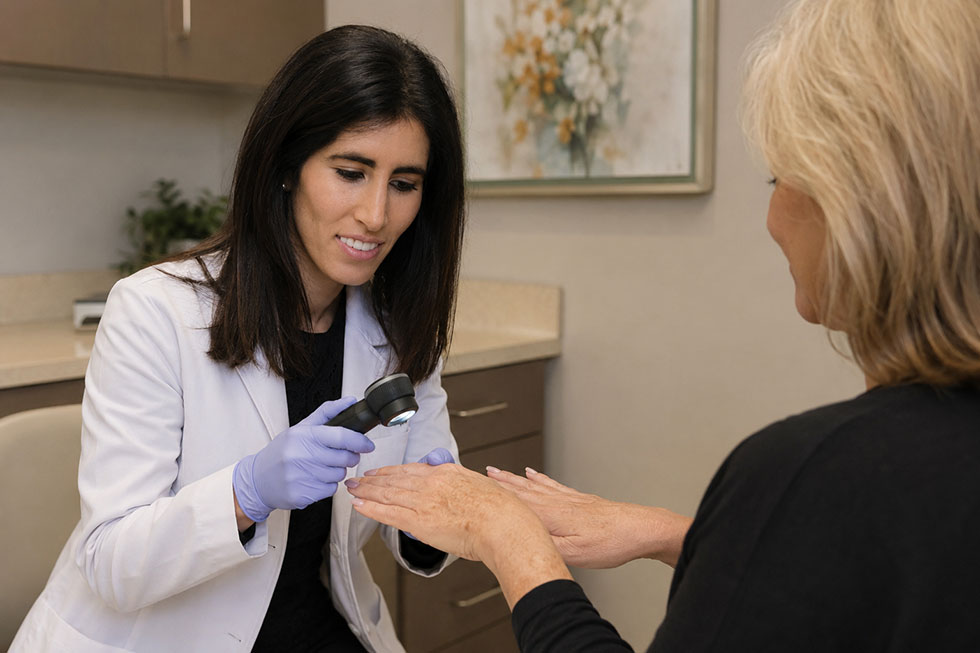
A dermatologist can check for actinic keratoses, basal cell carcinoma, squamous cell carcinoma, melanoma, and other concerns before starting cosmetic treatment. This is especially important if a spot changes, bleeds, crusts, grows, itches, hurts, or does not heal.
The AAD explains that dermatologists check for skin cancer before treating spots cosmetically because skin cancer can sometimes be mistaken for an age spot. American Academy of Dermatology
A Boca Raton dermatologist can help you build a plan that treats the look of your hands while protecting your skin health.
What Should You Do First?
Start with daily sunscreen.
Then add one new product at a time. This helps you see what your skin tolerates and what actually helps.
A simple starter plan may look like this:
- Apply SPF 30 or higher every morning.
- Reapply after washing your hands.
- Use vitamin C or another antioxidant during the day.
- Apply a retinoid at night.
- Moisturize after handwashing.
- Schedule a dermatology visit for spots, texture, or volume loss.
These skin care tips give your hands a better chance to look soft, smooth, and cared for through summer and beyond.
Get Help With Sun-Damaged Hands in Boca Raton, Palm Beach Gardens, and Pompano Beach
If you want skin care in Boca Raton that goes beyond face products, your hands deserve the same attention.
At Frieder Dermatology, we help patients repair sun-damaged hands with medical evaluation, prevention guidance, and cosmetic treatment options when appropriate. Our team provides care in Boca Raton, Palm Beach Gardens, and Pompano Beach.
Dr. Frieder provides a wide range of cosmetic and medical dermatology services, including Botox, fillers, laser treatments, skin rejuvenation procedures, acne care, psoriasis treatment, eczema care, skin cancer screenings, and other skin care treatments.
She is joined by Dr. Christopher Kowalczyk, D.O. (A.K.A. Dr. K), who treats the full spectrum of skin concerns, from complex medical conditions to cosmetic goals.
“The best plan for sun-damaged hands looks at the whole picture. Pigment, texture, volume, daily habits, and skin cancer risk all matter,” says Dr. Frieder.
If your hands feel dry, spotted, thin, or older than you want them to look, we can help you choose the right next step.
FAQs About Sun-Damaged Hands
Can sun-damaged hands go back to normal?
Sun-damaged hands can often look smoother, brighter, and healthier with the right care. Deep damage may not fully reverse, but sunscreen, retinoids, antioxidants, IPL, lasers, and fillers may improve visible aging.
What is the best treatment for brown spots on my hands?
The best treatment depends on the type of spot. IPL, laser treatments, prescription creams, and other dermatologist-guided options may help fade brown spots. A dermatologist should check spots first to rule out medical concerns.
Do hand wrinkles need Botox or fillers?
Fillers are often a better fit for thin, hollow-looking hands because they help restore lost volume. Botox is usually used for movement-related wrinkles in areas like the forehead, between the brows, or around the eyes.
How long does it take to improve sun-damaged hands?
Dryness can improve quickly with moisturizer. Brown spots, fine lines, and rough texture usually take weeks to months. In-office treatments may speed visible improvement, but maintenance matters.
What is the most important daily habit for aging hands?
Sunscreen. Apply broad-spectrum SPF 30 or higher to the backs of your hands every day and reapply after washing.
Bring Younger-Looking Hands Back
Your hands do a lot for you. Give them the same care you give your face.
Schedule a visit with Frieder Dermatology to evaluate sun-damaged hands, check suspicious spots, and create a treatment plan that fits your skin.
Click here or call us at (561) 210-7310 to schedule your consultation. Your journey toward healthier, more radiant skin starts with that first call.
About the Author
Dr. Jillian Frieder is a board-certified dermatologist providing cosmetic and medical dermatology services in Boca Raton, Palm Beach Gardens, and Pompano Beach. A graduate with Distinction from Wayne State University and a member of Alpha Omega Alpha, she completed her dermatology residency at Baylor University Medical Center, where she served as Chief Resident.

Why Do I Get Itchy Skin in the Summer?
| Itchy skin in the summer is commonly caused by heat rash, insect bites, sun sensitivity, dry skin, outdoor allergens, swimmer’s itch, or sweat-induced hives. Heat and humidity can trap sweat under the skin, while bug bites, sun exposure, and plant allergens can trigger itching, bumps, hives, or a skin rash. |
Itchy skin in the summer often comes from the same things we enjoy most this time of year: sunshine, swimming, outdoor time, and warm weather.
The American Academy of Dermatology Association notes that summer skin issues can include heat rash, sun allergy, swimmer’s itch, poison ivy, and other itchy reactions. The Mayo Clinic explains that heat rash develops when sweat gets trapped under the skin, causing bumps, itching, and prickling.
At Frieder Dermatology, we help our patients figure out what is causing the itch and how to calm it. Our offices serve Boca Raton, Palm Beach Gardens, and Pompano Beach.
If you need a Boca Raton dermatologist for a summer rash, Dr. Jillian H. Frieder, MD, FAAD, and Dr. Christopher Kowalczyk, D.O., known as Dr. K, treat the full range of medical and cosmetic skin concerns.
What Causes Itchy Skin in the Summer?
 Summer creates the perfect setup for irritated skin. Heat makes you sweat. Humidity keeps sweat and oil on the skin longer. Sunscreen, bug spray, pool water, and tight clothing can add another layer of irritation.
Common triggers include:
- Heat rash from blocked sweat ducts
- Mosquitoes, no-see-ums, fire ants, chiggers, and other bites
- Sun sensitivity or photosensitivity
- Dry skin from chlorine, salt water, and air conditioning
- Outdoor allergens from plants, grass, and weeds
- Swimmer’s itch after some freshwater exposure
- Sweat-induced hives after body temperature rises
| “Summer itching is not one single condition. The pattern, timing, and location of the rash can tell us a lot about what is triggering it.” – Jillian H. Frieder, MD, FAAD, Frieder Dermatology. |
Heat Rash From Trapped Sweat
Heat rash, also called prickly heat, happens when sweat ducts become blocked. Sweat gets trapped under the skin and causes tiny bumps, itching, and a prickly feeling.
A skin rash from heat often appears where clothing rubs or where skin folds trap moisture. This can include the chest, back, neck, underarms, groin, and under the breasts.
You can lower your risk by wearing loose cotton clothing, cooling your skin, and changing out of sweaty clothes. If heat rash keeps returning, medical dermatology services can help you find out if another condition is involved.
Insect Bites Are More Common During Florida Summers
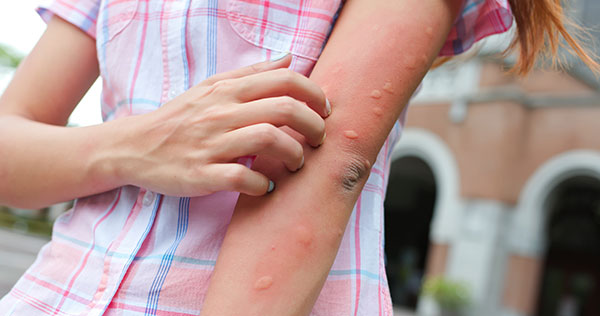 Mosquitoes, fire ants, chiggers, and no-see-ums thrive in warm, humid weather. Summer rain can leave standing water, which gives mosquitoes more places to breed. Coastal areas, shaded yards, parks, and wooded spots can also increase exposure.
Most insect bites cause a raised, itchy bump. Some people get larger swelling, blistering, or a stronger reaction.
Try these steps:
- Use EPA-registered insect repellent before outdoor activity.
- Drain standing water near your home.
- Wear long sleeves and pants around dusk or in wooded areas.
- Avoid scratching bites, since broken skin can get infected.
A bite that becomes hot, painful, swollen, draining, or streaked with redness needs medical attention.
Sun Sensitivity And Summer Skin Reactions
Sunburn is not the only summer sun problem. Some people develop itchy bumps, hives, or blister-like reactions after UV exposure. This can happen even without a classic burn.
Sun sensitivity may come from medications, skin care products, autoimmune conditions, or a condition called polymorphous light eruption. If the same rash appears after sun exposure each year, do not guess. Get it checked.
South Florida sun exposure also raises long-term skin health concerns. Regular skin cancer screenings give us a chance to check changing spots and discuss sun protection that fits your skin.
“Patients often think every sun-related reaction is a sunburn, but that is not always true,” Dr. Frieder says. “Some rashes need a different treatment plan than aloe and time.”
Sun Sensitivity And Summer Skin Reactions
Sunburn is not the only summer sun problem. Some people develop itchy bumps, hives, or blister-like reactions after UV exposure. This can happen even without a classic burn.
Sun sensitivity may come from medications, skin care products, autoimmune conditions, or a condition called polymorphous light eruption. If the same rash appears after sun exposure each year, do not guess. Get it checked.
South Florida sun exposure also raises long-term skin health concerns. Regular skin cancer screenings give us a chance to check changing spots and discuss sun protection that fits your skin.
“Patients often think every sun-related reaction is a sunburn, but that is not always true,” Dr. Frieder says. “Some rashes need a different treatment plan than aloe and time.”
Dry Skin Can Still Happen In Humid Weather
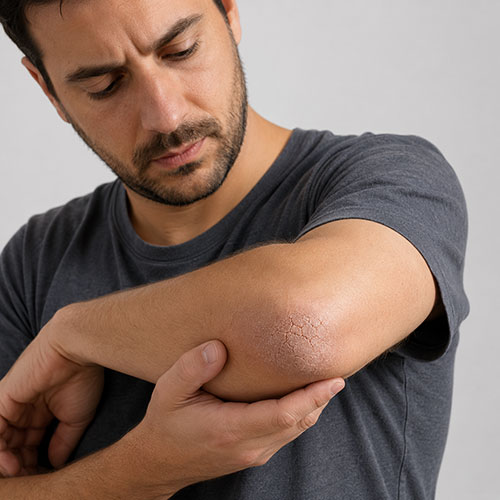 It sounds strange, but summer can dry your skin out. Air conditioning pulls moisture from the air. Pool chlorine can strip oils from the skin. Salt water, extra showers, and harsh soap can make dryness worse.
Dry skin can itch, flake, sting, or make an existing condition flare. People with eczema may notice more irritation after swimming or sweating. Our eczema care can help when dryness turns into repeat inflammation.
To help your skin recover:
- Rinse after swimming.
- Use a gentle cleanser.
- Apply moisturizer while skin is still damp.
- Avoid hot showers after sun or pool exposure.
- Choose fragrance-free skin care when irritation starts.
Outdoor Allergens Common In South Florida Summers
Grass, weeds, plants, and yard debris can irritate sensitive skin. Poison ivy, poison oak, and poison sumac can cause a blistering reaction after urushiol oil touches your skin.
A plant-related skin rash often appears in lines, patches, or streaks where the plant brushed against you. The rash may show up hours later or even a few days after exposure.
Wash your skin and clothing after yardwork, hiking, or brushing against plants. Do not burn poison ivy or related plants, since the oil can become airborne and cause a serious reaction.
Swimmer’s Itch And Water-Related Irritation
Swimmer’s itch can happen after freshwater exposure in some lakes or ponds. It comes from a skin reaction to microscopic parasites. It usually causes small, itchy bumps after swimming.
You can also itch after pools or ocean water. Chlorine, salt, sand, sunscreen, and wet swimsuits can all irritate the skin.
Rinse off after swimming. Change out of wet clothing. Use moisturizer after showering. If bumps spread, blister, or last more than a few days, it is time to get your skin checked.
Sweat-Induced Hives
Some people develop hives when their body temperature rises. This can happen after exercise, hot weather, stress, spicy food, or hot showers. The condition is often called cholinergic urticaria.
The hives are usually small, itchy bumps that appear quickly. They may fade after your body cools down.
Repeated hives are one of the reasons itchy skin in the summer should not be ignored. A dermatologist can help sort out hives, eczema, allergic reactions, heat rash, and other causes that may look similar at first.
How To Prevent Summer Itching
You cannot control South Florida weather, but you can reduce common triggers.
Start with these habits:
- Wear loose, breathable clothing.
- Keep your skin cool when you feel prickling or stinging.
- Rinse after heavy sweating, swimming, or yardwork.
- Use broad-spectrum SPF 30 or higher, as recommended by the AAD.
- Apply insect repellent before outdoor time.
- Change out of wet swimsuits and damp workout clothes.
- Moisturize after showers.
- Avoid fragranced products when your skin feels irritated.
If you have sensitive skin, keep your routine simple during summer flares. Too many products can make itching worse.

When You Should See A Dermatologist
See a dermatologist when itching is intense, spreading, painful, blistering, draining, or paired with fever. You should also get care if a skin rash lasts longer than a few days or keeps returning after the same trigger.
A Boca Raton dermatologist can examine your skin, ask about recent exposures, and recommend the right care. Treatment may include prescription creams, antihistamines, infection care, allergy guidance, or a change in your skin routine.
You should also come in if over-the-counter products make the rash worse. Many drugstore creams can irritate sensitive skin when the diagnosis is wrong.
How Frieder Dermatology Can Help In Boca Raton, Palm Beach Gardens, And Pompano Beach
Frieder Dermatology treats medical and cosmetic skin concerns with personal care and a clear plan. Dr. Frieder provides Botox, fillers, laser treatments, skin rejuvenation procedures, acne care, psoriasis treatment, eczema treatment, skin cancer treatments, and other skin care treatments. Dr. K also treats the full spectrum of skin concerns, from complex conditions to cosmetic goals.
You can learn more about our dermatology team and cosmetic dermatology treatments before your visit. Our goal is to identify the cause of your itching, calm the reaction, and help you prevent the next flare.
“Patients should not have to spend the whole summer guessing what is wrong with their skin,” says Jillian H. Frieder, MD, FAAD. “Once we know the trigger, we can build a plan that gives the skin a better chance to stay calm.”
If itchy skin in the summer keeps coming back, schedule an appointment with Frieder Dermatology. A quick exam can help you get answers before the next South Florida heat wave makes your skin feel worse.
FAQs About Summer Itching
Why Do I Itch After Sweating?
Sweat can irritate the skin or become trapped under blocked sweat ducts. This may lead to heat rash, prickling, or hives.
Can Bug Bites Cause A Rash?
Yes. Bug bites can cause red bumps, swelling, itching, blistering, or a stronger allergic reaction in some people.
Can The Sun Make My Skin Itch Without A Sunburn?
Yes. Sun sensitivity can cause itchy bumps, hives, or red patches after UV exposure, even if your skin does not look burned.
When Should I Call Frieder Dermatology?
Call Frieder Dermatology when itching is severe, spreading, painful, blistering, infected, or lasting more than a few days. You should also schedule care for repeated seasonal flare-ups.
Click here or call us at (561) 210-7310 to schedule your consultation. Your journey toward healthier, more radiant skin starts with that first call.
About the Author
Dr. Jillian Frieder is a board-certified dermatologist providing cosmetic and medical dermatology services in Boca Raton, Palm Beach Gardens, and Pompano Beach. A graduate with Distinction from Wayne State University and a member of Alpha Omega Alpha, she completed her dermatology residency at Baylor University Medical Center, where she served as Chief Resident.
Blue Light Therapy vs. Photodynamic Therapy: What’s the Best Acne Treatment?
| Key Takeaways: The best acne treatment depends on acne type, skin sensitivity, and treatment goals. Blue light therapy may help reduce acne-causing bacteria and active breakouts, while photodynamic therapy treats sun damage, precancerous lesions, and select early skin cancers. A dermatologist-guided plan gives you the clearest path forward. |
The best acne treatment is not always the one with the flashiest name or the bluest glow in the room.
For many patients, acne-focused light care can help reduce active breakouts. But the right choice depends on your skin type, acne pattern, inflammation, sensitivity, and goals. Some patients need light-based treatment. Others need prescription topicals, oral medication, or a plan that combines several tools.
The American Academy of Dermatology states that Acne affects up to 50 million Americans each year, making it the most common skin condition in the United States. They also note that acne comes in different forms, including blackheads, whiteheads, pimples, cysts, and nodules, so one plan does not fit every patient.
Frieder Dermatology has offices conveniently located in Boca Raton, Palm Beach Gardens, and Pompano Beach. Dr. Jillian Frieder provides cosmetic and medical dermatology services, including Botox, fillers, laser treatments, skin rejuvenation procedures, acne care, psoriasis care, eczema care, skin cancer screenings, and other skin care treatments.
She is joined by Dr. Christopher Kowalczyk, D.O., known as Dr. K, who treats the full spectrum of skin concerns, from complex conditions to cosmetic goals.
Quick Answer: Which Option Is the Best Acne Treatment?
The best acne treatment depends on what causes your breakouts and how your skin responds to treatment.
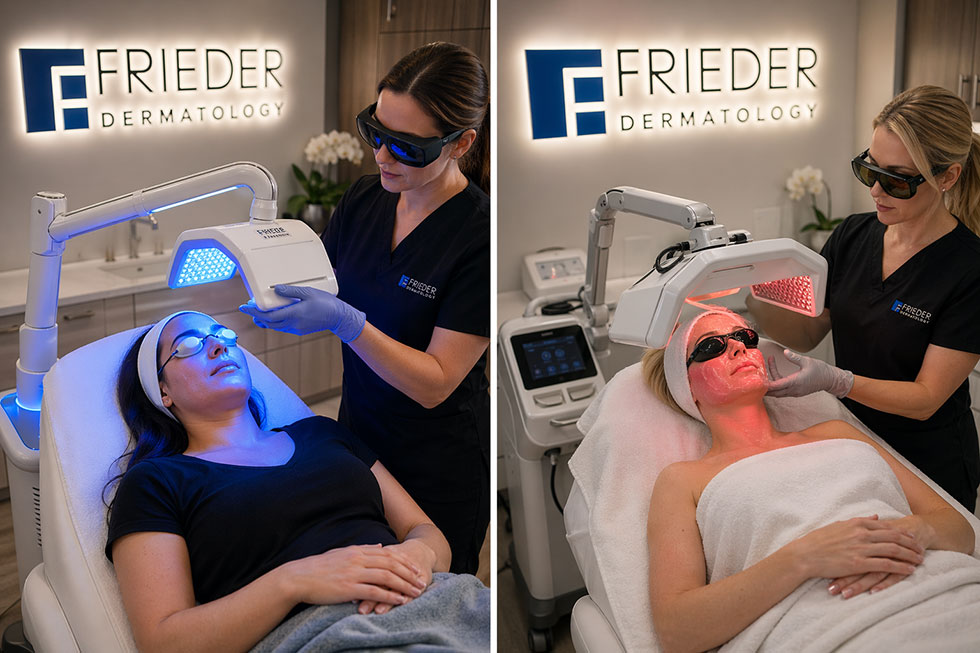
Blue light phototherapy for acne can help patients with active breakouts by targeting acne-causing bacteria. PDT has a different role at Frieder Dermatology. Our team uses it mainly for sun damage, precancerous lesions, and select early skin cancers.
| “The right acne plan starts with the right diagnosis. We look at your skin, your history, and your treatment goals before we recommend a device, prescription, or procedure.” – Jillian H. Frieder, MD, FAAD, Frieder Dermatology. |
Light-based acne care can help, but it should not replace a full skin evaluation. The American Academy of Dermatology notes that lasers and light treatments can reduce acne, but they rarely clear acne by themselves. A dermatologist may pair light care with medication applied to the skin.
How Blue Light Therapy Helps Acne
Blue light therapy uses controlled wavelengths of light to target bacteria linked to inflammatory acne. This can help reduce visible breakouts and calm the skin over time.
This treatment may fit patients who:
- Breakouts often occur despite over-the-counter products
- Want an in-office acne option without a long recovery time
- Have inflammatory pimples instead of deep cysts alone
- Need support along with a dermatologist-guided skin care plan
The treatment does not work like a magic eraser. Most patients need a series of sessions. Some also need prescription products to control oil, clogged pores, hormones, or inflammation.
“Patients often come in after trying many products on their own. Our job is to stop the guessing and build a plan that fits their skin,” says Dr. Frieder.
What Photodynamic Therapy Does
Photodynamic therapy uses a light-sensitive medication and a controlled light source. At Frieder Dermatology, we use PDT mainly to treat sun damage, actinic keratoses, and select early skin cancers.
That matters because patients may confuse acne-focused light care with PDT. They can involve light, but they do not serve the same purpose.
Our PDT treatment page explains how this option helps target abnormal cells from sun damage. It is a medical treatment that requires careful planning, aftercare, and sun avoidance instructions.
Blue Light Therapy vs. PDT for Acne
Blue light therapy and PDT may sound similar, but they differ in purpose, process, and aftercare.
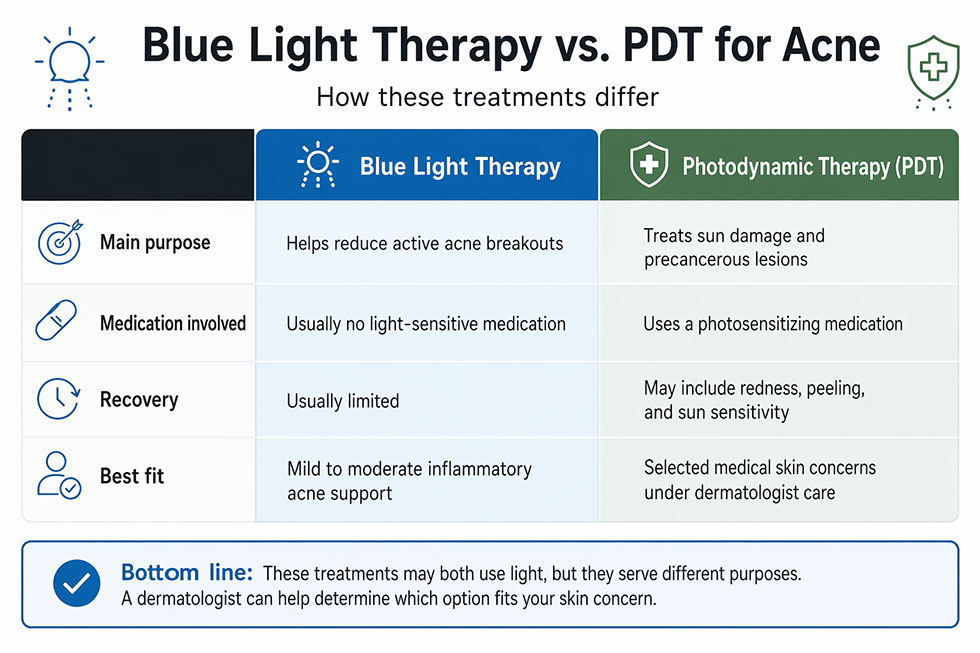
This is why a consultation matters. If your main concern is pimples, clogged pores, or acne inflammation, your dermatologist may talk with you about acne-specific care. If your main concern involves sun damage or precancerous spots, PDT may enter the conversation for a different reason.
Why Quick Acne Fixes Usually Are Not Enough
Ice, spot treatments, and salicylic acid may help a sudden breakout look less angry. But quick fixes do not always solve the reason acne keeps coming back.
Our blog on how to get rid of acne quickly explains how short-term steps can help, but lasting improvement usually needs smart skin care, consistency, and medical guidance.
You should avoid picking, scrubbing, or stacking too many harsh products. Those habits can irritate your skin and make redness or marks worse.
“The goal is not to dry out your face. The goal is to control acne while protecting the skin barrier,” says Dr. Frieder.
When to See a Medical Dermatologist for Acne
You should see a medical dermatologist when acne keeps returning, feels painful, leaves marks, or stops responding to drugstore products.
You should also schedule a visit if you have:
- Deep cysts or nodules
- Breakouts along the jawline or chin
- Acne that flares with your cycle
- Irritated skin from too many products
- Dark marks or early scarring
- Acne that affects your confidence
A dermatologist can help identify the type of acne you have. Then we can match your skin with acne treatment options that make sense for your goals.

Acne Care at Frieder Dermatology
Frieder Dermatology offers personalized care from a team that treats acne, rosacea, eczema, psoriasis, sun damage, skin cancer concerns, and cosmetic skin goals.
As a Boca Raton dermatologist, Dr. Frieder provides medical and cosmetic care with a focus on clear explanations and practical treatment plans. Dr. K also helps patients manage complex skin concerns and cosmetic goals.
Our team may recommend:
- Prescription topical medication
- Oral medication when appropriate
- Light-based acne care
- Skin care routine changes
- Treatment for acne marks or texture
- Ongoing follow-up to adjust your plan
The best acne treatment is the one that fits your skin, your lifestyle, and your medical history. We help you sort through the noise and choose a plan with a clear reason behind every step.
FAQs About Light-Based Acne Treatment
Is light treatment good for acne?
Yes, light treatment may help reduce acne for some patients. It works best when a dermatologist uses it as part of a full acne plan, not as a stand-alone cure.
Is PDT the same as acne light treatment?
No. They may both involve controlled light, but the purpose differs. Acne-focused care targets breakouts. PDT targets sun damage, precancerous lesions, and selected early skin cancers.
What is the best acne treatment if pimples keep coming back?
The best acne treatment for recurring pimples starts with a dermatologist exam. You may need prescription products, acne-focused light care, skin care changes, or a combined plan.
Can light treatment replace acne medication?
Sometimes light care helps reduce acne, but many patients still need topical or oral medication. Your dermatologist can recommend the right mix after examining your skin.
Ready to Build a Better Acne Plan?
Talk with a Boca Raton dermatologist who can help you understand what your skin needs and why. Frieder Dermatology can help you compare treatment options and build a plan that supports clearer, healthier-looking skin.
Click here or call us at (561) 210-7310 to schedule your consultation. Your journey toward healthier, more radiant skin starts with that first call.
About the Author
Dr. Jillian Frieder is a board-certified dermatologist providing cosmetic and medical dermatology services in Boca Raton, Palm Beach Gardens, and Pompano Beach. A graduate with Distinction from Wayne State University and a member of Alpha Omega Alpha, she completed her dermatology residency at Baylor University Medical Center, where she served as Chief Resident.
How Long Does Botox Last?
| Botox usually lasts about 3 to 4 months, with results starting in 3 to 7 days and reaching full effect in about 2 weeks. In this blog, we explain what affects how long Botox lasts, how to make results last longer, and when to schedule your next treatment at Frieder Dermatology. |
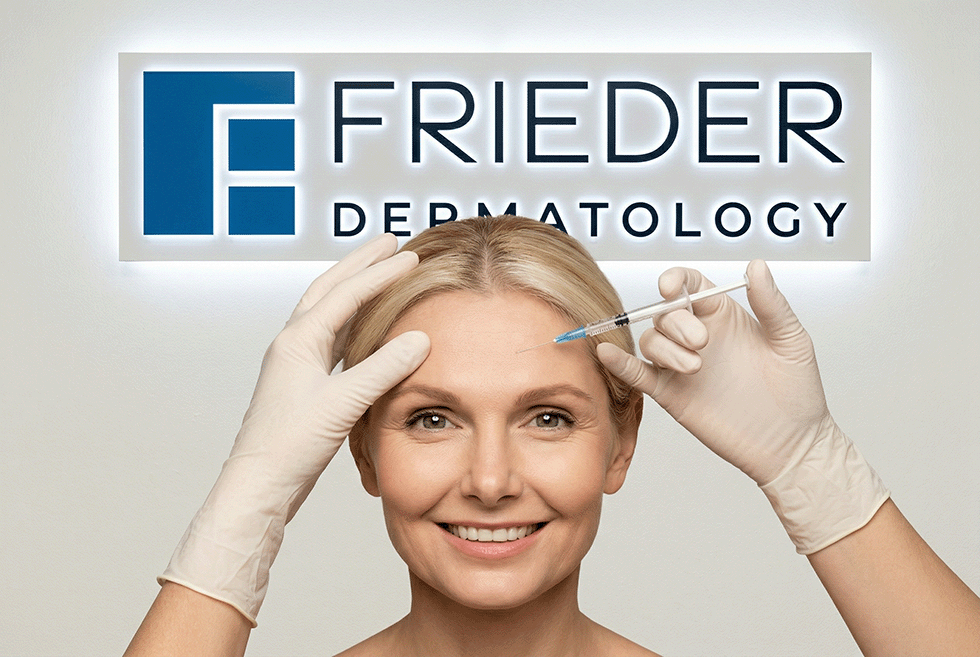
Botox is popular for a reason: it works, it wears off gradually, and it fits into real life. For anyone asking “how long does Botox last?”, the answer is typically 3 to 4 months, though some patients may notice effects fade a little sooner or hold a little longer.
 That timeline is consistent across leading medical sources. The American Society of Plastic Surgeons notes that results often start in 3 to 5 days, reach their final look after about 2 weeks, and commonly last 3 to 4 months.
The Cleveland Clinic says most people see effects around day 3 or 4, full results in 10 to 14 days, and average longevity around 3 to 4 months, with repeat treatment often recommended every 3 to 6 months.
At Frieder Dermatology, patients can visit our offices in Boca Raton, Palm Beach Gardens, and Pompano Beach for a full range of medical and cosmetic services. Dr. Jillian H. Frieder, MD, FAAD, and Dr. Christopher Kowalczyk treat both medical skin concerns and aesthetic goals, including Botox, fillers, lasers, and skin rejuvenation procedures.
The Usual Botox Timeline
For most patients, Botox follows a pretty clear timeline.
After treatment, the product needs time to relax the targeted muscles. You usually will not see the full result right away. In our practice, you will often start to notice changes within 3 to 7 days, and you will usually see the full effect at about 2 weeks.
That is why we tell you to give it time before you judge your final result. You can learn more about Botox treatments in Boca Raton before you book.
After the full effect sets in, the result gradually fades. Botox does not stop muscle movement forever. Your body slowly restores activity in the treated area, and that is why lines and expression movement return over time. For most people, that happens around the 3 to 4 month mark, though some patients notice a shorter or longer window.
| “Botox works best when you understand that it is temporary by design. We want to give you a smoother, more rested look that still feels natural.” – Jillian H. Frieder, MD, FAAD – Frieder Dermatology |
What Affects How Long Botox Lasts?
One of the most common questions we hear is, “How long does Botox last?” The honest answer is that it depends on several factors.
Your Metabolism
Your body may break down Botox faster than someone else’s. If you have a faster metabolism, you may notice that your result fades a little sooner.
The Treatment Area
Some parts of your face move more than others. High-motion areas like the forehead, frown lines, and crow’s feet may wear off faster because you use those muscles throughout the day.
Your Muscle Strength
If you have stronger facial muscles, you may need a more customized treatment plan. The right dose and the right placement matter. More product alone is not the answer.
Your Treatment History
If this is your first treatment, your result may not last as long as it might after you stay consistent with future visits. Over time, some patients notice that regularly treated muscles stay relaxed longer.
Dr. Frieder explains it this way: “Your facial anatomy, muscle movement, and treatment goals all play a role. We tailor treatment to your face, not to a one-size-fits-all schedule.”

When Will You See the Full Effect?
Botox takes time to work, and that is important to remember.
You should not expect your final result the next morning. Most people start to see a change within a few days, but the full result usually appears around 2 weeks. If you judge your treatment too early, you may think it is not working when it is simply still settling in.
That also means you should not assume you need more Botox after just a day or two. If you are researching Botox treatments in Boca Raton, it helps to understand the real timeline before you book, especially if you want to look your best for a wedding, reunion, vacation, party, or work event.
Do Some Areas Wear Off Faster Than Others?
Yes, they can.
If you raise your brows often, squint in the sun, or frown a lot during the day, those repeated movements can affect how long your result holds. The forehead and glabella often stay active because you use them constantly in normal expression. That is one reason some patients feel certain areas wear off faster than others.
We look at those movement patterns when we plan your treatment. That helps us give you a result that looks balanced and natural, not stiff or overdone.
How To Help Your Botox Last Longer
You cannot make Botox permanent, but you can help your results last as long as possible.
 Stay on schedule. Many patients do best when they return before full muscle movement comes back. That does not mean everyone needs the same timing. It means we should match your treatment plan to your face and your goals.
Protect your skin from the sun. Botox relaxes muscles, but it does not stop UV damage or collagen loss. That is why your daily skin habits still matter. A broader cosmetic dermatology plan can help support smoother, healthier-looking skin.
Think about your overall routine. Very active lifestyles may affect how quickly your body processes the treatment. That does not mean you need to stop exercising. It just means your timeline may differ from someone else’s.
As Dr. Frieder says, “The best Botox result does not depend only on what we do during treatment. Your skin care, sun habits, and consistency also matter.”
Botox, Dysport, and Fillers Do Different Jobs
You will often hear people use these terms as if they mean the same thing, but they do very different jobs.
Botox and Dysport relax targeted muscles that create expression lines. If you want to compare options, you can also read about Dysport treatment.
Fillers work differently. They add volume rather than relaxing muscle movement. If volume loss, lip shape, or deeper folds concern you, Restylane dermal fillers may be part of the conversation.
If you ask how long Botox lasts, you may also need a broader conversation about what Botox can treat, what it cannot treat, and when combining treatments may give you a better result.
Why Provider Skill Matters
Technique matters.
We consider Botox a safe treatment when a qualified medical professional performs it, and the Cleveland Clinic says Botox is generally safe when a licensed healthcare provider administers it. Where we place the product, how much we use, and how we read your facial anatomy all affect your result.
That is one reason why, when you look for Botox treatments in Boca Raton, you want more than a quick appointment. You want a practice that understands facial anatomy, movement patterns, and the difference between smoothing lines and flattening your expression.
We provide that level of care through a team that handles both medical and cosmetic dermatology. You can also read more about Botox safety or schedule a visit to our Palm Beach Gardens office or our Pompano Beach practice.
How Often Should You Plan for Treatment?
For many patients, every 3 to 4 months is a good starting point.
That is not a rigid rule. It is simply the range where many people maintain their results well. If your movement returns sooner, you may come in earlier. If your result lasts longer, you may wait a little more time between visits.
We watch how your face responds over time and adjust your plan instead of forcing you into a standard schedule. That is one of the biggest benefits of seeing an experienced injector.
So, how long does Botox last in real life? Most often, it lasts long enough to make a visible difference for a season while still giving you flexibility. That balance is one reason so many patients choose it.
If you want a treatment plan that looks natural and fits your goals, our team at Frieder Dermatology is here to help you in Boca Raton, Palm Beach Gardens, and Pompano Beach.
Click here or call us at (561) 210-7310 to schedule your consultation. Your journey toward healthier, more radiant skin starts with that first call.
About the Author
Dr. Jillian Frieder is a board-certified dermatologist providing cosmetic and medical dermatology services in Boca Raton and Palm Beach Gardens. A graduate with Distinction from Wayne State University and a member of Alpha Omega Alpha, she completed her dermatology residency at Baylor University Medical Center, where she served as Chief Resident.
What is the 4-2-4 Rule for Skin Care?
If you’re chasing glowing, Instagram-worthy skin but tired of routines that feel like a full-time job, it’s time to try something different. So, what is the 4-2-4 rule for skin care?
It’s a quick, 10-minute cleansing method that feels like a spa moment in your own bathroom and leaves your skin fresh, smooth, and makeup-ready. No trendy gadgets, no 12-step chaos, just a simple rhythm of cleansing and rinsing that works.
That’s exactly what the 4-2-4 rule does, and it’s a favorite technique recommended by Frieder Dermatology.
Whether you have a hectic lifestyle in Boca Raton or just finished enjoying a “treat yourself day” in Palm Beach Gardens, this easy method can fit into your routine and transform your skin.
Mastering the 4-2-4 Rule: A Simple How-To
 More women are committing to skincare than ever before, with 60% reporting they follow a consistent routine. Most of us are building habits to keep our skin healthy and glowing.
The 4-2-4 skin care routine is an easy three-step cleansing technique. It’s inspired by Japanese beauty traditions but has become popular everywhere, especially among those who want cleaner & healthier skin without all the guesswork.
Step 1: Oil Cleanser – 4 Minutes
Start with an oil-based cleanser and gently massage it into your skin for four full minutes. Use slow, circular motions and focus on areas where makeup, sunscreen, and natural oils build up, like the T-zone. This step melts away oil-based impurities that a regular face wash often misses. Take your time, this isn’t a quick scrub but a chance to break down stubborn residue while boosting blood flow to your skin.
Step 2: Foaming Cleanser – 2 Minutes
Switch to a water-based or foaming cleanser and work it into your skin for two minutes. This helps remove sweat, dirt, and anything water can dissolve. Pay special attention to areas prone to clogged pores, like your nose and chin. The double-cleanse approach makes sure nothing is left behind that could dull your glow or cause breakouts.
Step 3: Rinse – 4 Minutes
Finish by rinsing your face for four minutes with warm, not hot water. Alternate between splashing and gently massaging as you rinse to fully flush out any leftover cleanser and impurities. The extended rinse also preps your skin to absorb serums, moisturizers, or treatments more effectively. Don’t rush this step; it’s the difference between an average cleanse and a true skin refresh.
Don’t rush the rinse! That final step is essential for flushing out residue and prepping your skin to absorb serums, moisturizers, or treatments more effectively.
That’s it. No complicated tools or trendy products, just 10 minutes of focused skincare.
Why the 4-2-4 Rule Actually Works
 This method is more than just a clever number trick. The four-minute oil cleanse breaks down makeup, SPF, excess sebum, and daily pollution, which is especially important in sunny & humid places like Boca Raton.
Next, the two-minute foaming cleanse digs deeper into the pores, removing anything left behind. The final four-minute rinse ensures no residue remains and that your skin is fully refreshed.
By massaging the face for several minutes, you’re also boosting circulation and lymphatic drainage. This leads to a healthy glow and improved skin texture over time.
A full skin cell cycle takes about 30 days, and a structured cleansing routine gives your skin the consistency it needs to renew itself throughout that cycle.
That’s why it’s so important to stick with it. Most routines fall short because they’re either too complicated or not followed regularly.

Why We Recommend It at Frieder Dermatology
 Getting started is easier than you think! As a long-trusted dermatologist in Boca Raton and Palm Beach Gardens, Dr. Jillian Frieder works with patients from communities like The Polo Club, Camino Gardens, Avenir, and Ballenisles to develop skincare routines that work with their lifestyle.
This skin care routine is effective when paired with medical-grade skincare products or dermatological treatment, which we offer at our clinics in Boca Raton and Palm Beach Gardens. Whether you have sensitive, acne-prone, or aging skin, this method can be customized to your needs.
Keep It Simple, Stay Consistent
The 4-2-4 Rule for skin care is simple, smart, and sustainable. Whether you make it your evening wind-down ritual or your morning reset before hitting the gym or beach, this routine fits easily into your day.
Ready to take control of your skin? Schedule a consultation with our expert dermatologist at either our Boca Raton or Palm Beach Gardens office today. Click here or call us at (561) 210-7310. Clear, healthy skin is closer than you think.
About the Author
Dr. Jillian Frieder is a board-certified dermatologist providing cosmetic and medical dermatology services in Boca Raton and Palm Beach Gardens. A graduate with Distinction from Wayne State University and a member of Alpha Omega Alpha, she completed her dermatology residency at Baylor University Medical Center, where she served as Chief Resident.