

Skin Cancer Treatment: Surgical and Nonsurgical Options
Key Takeaways
|
Skin cancer treatment starts with a plan, not a guessing game. Surgery, prescription creams, procedures that destroy cancer cells, and superficial radiation therapy offer different ways to address the disease. The right approach depends on the cancer’s type, depth, size, and location.
 A suspicious spot does not tell the whole story. A biopsy identifies the diagnosis and helps determine the next step. The American Academy of Dermatology estimates that one in five Americans will develop skin cancer during their lifetime, with approximately 9,500 diagnoses each day.
Early evaluation gives you answers and a path forward.
At Frieder Dermatology, we combine careful evaluation with surgical and nonsurgical care. Jillian H. Frieder, MD, FAAD, a board-certified medical dermatologist, provides personalized recommendations and clear explanations.
We help you understand your diagnosis, treatment choices, and follow-up care.
From a Suspicious Spot to a Diagnosis
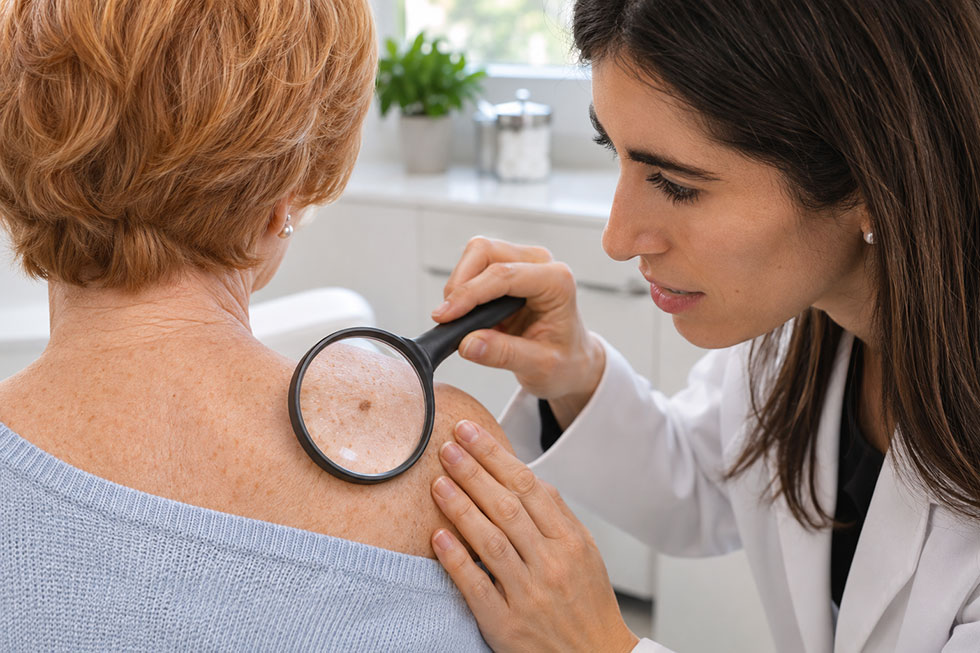
A new growth, changing mole, or sore that keeps bleeding deserves an examination. During a skin cancer screening, we examine concerning areas and determine which lesions need a biopsy.
We offer two diagnostic techniques:
- Shave biopsy: Removes a sample from the growth using a blade.
- Punch biopsy: Uses a circular instrument to remove a sample containing multiple skin layers.
We send the tissue to a laboratory for microscopic examination. The results identify if it is cancer and guide further care. A biopsy does not automatically mean the entire cancer has been removed.
| “A biopsy gives us information we cannot get from appearance alone. That information helps us recommend care that fits the diagnosis.” – Jillian H. Frieder, MD, FAAD, Frieder Dermatology |
Surgical Options for Removing Skin Cancer
Surgical Excision
During an excision, the doctor removes the tumor and a margin of surrounding skin. A laboratory examines the tissue, including its edges, for remaining cancer cells.
Local anesthesia numbs the area. The wound’s size and location determine how we close it and the care it needs afterward. If cancer reaches the examined margins, additional treatment is required.
Excision treats many basal cell and squamous cell carcinomas. It also plays a central role in melanoma care, with the surgical plan based on the diagnosis and stage.
Mohs Surgery
Mohs treatment removes cancer in stages. The surgeon examines each layer under a microscope and removes additional tissue where cancer remains.
This approach preserves healthy tissue while checking the surgical margins during the procedure. It serves selected high-risk cancers, recurrent tumors, and cancers in areas such as the nose, ears, and eyelids.
Our Mohs surgery services form part of a treatment plan based on the tumor’s features and your health. Wound closure ranges from healing without stitches to surgical repair.
Scraping and Electrical Destruction
We also offer electrodessication and curettage, known together as ED&C. The procedure combines scraping away cancerous tissue with electrical energy that generates heat to destroy remaining cells.
ED&C treats selected small, low-risk basal cell and squamous cell cancers. Tumor depth, location, and recurrence risk determine suitability. The treated area forms a wound that requires care as it heals, and scarring is possible.

Nonsurgical Options for Selected Skin Cancers
Prescription Creams
Topical chemo creams treat selected superficial cancers and precancerous lesions. These medications act on abnormal cells within the treated skin.
Fluorouracil, also called 5-FU, is an established topical chemotherapy medication. The prescription and application schedule depend on the diagnosis. Creams do not replace surgery for cancers that extend beyond the depth they can treat.
Redness, irritation, crusting, and sensitivity are expected treatment reactions. We explain how to apply your medication and when to contact us. The American Cancer Society’s guidance on topical medicines explains their uses and side effects.
Superficial Radiation Therapy and GentleCure™
IG-SRT stands for image-guided superficial radiation therapy. It uses low-energy X-rays to destroy cancer cells, with ultrasound imaging to guide care.
We offer this approach through GentleCure™ for selected basal cell and squamous cell cancers. IG-SRT provides a nonsurgical option when the diagnosis, treatment goals, and medical circumstances support radiation.
Treatment requires a series of appointments. The radiation delivery itself is painless, but skin reactions include redness, peeling, and changes in pigmentation. Radiation also carries a risk of scarring. The American Cancer Society explains how superficial radiation works.
Photodynamic Therapy
Photodynamic therapy combines a light-sensitive medication with a controlled light source. The activated medication destroys abnormal cells.
This approach treats actinic keratoses, which are precancerous lesions, and selected superficial cancers. It differs from radiation therapy and does not treat invasive disease broadly. Aftercare includes protection from light exposure and management of redness or irritation.
 Choosing the Right Skin Cancer Treatment
Your diagnosis determines which options belong in the discussion.
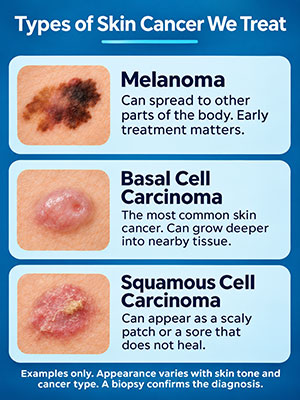
- Basal cell carcinoma: Treatment depends on the subtype, depth, location, and risk of recurrence.
- Squamous cell carcinoma: Care distinguishes disease confined to the outer skin layer from invasive tumors.
- Melanoma: Surgery and staging guide care. Additional specialists and treatments address disease that requires more extensive management.
Your immune health, previous procedures, and ability to complete aftercare also influence the plan.
Dr. Frieder explains, “The best recommendation starts with the cancer’s features and your health. We explain why a procedure fits your needs and what it involves.”
Healing and Follow-Up
Recovery depends on the procedure and treatment area. Follow your wound-care instructions, attend scheduled appointments, and contact us about increasing pain, spreading redness, drainage, or bleeding that does not stop.
Long-term care includes skin examinations and sun protection. Beach walks, tennis, and gardening expose South Florida skin to UV radiation throughout the year. Use broad-spectrum SPF 30 or higher sunscreen, protective clothing, and shade.
“Finishing a procedure is one part of your care. Follow-up helps us check healing and identify new concerns,” says Dr. Frieder

Personalized Care Close to Home
Our Boca Raton office on Clint Moore Road gives you a convenient place to begin an evaluation. At our Palm Beach Gardens office on Northlake Boulevard, you can discuss a concerning spot and your next steps.
Our Pompano Beach office on SW 3rd Street offers another location for dermatologic care. We coordinate procedure scheduling around the services your diagnosis requires.
As your medical dermatologist, Dr. Frieder brings board certification, residency training at Baylor University Medical Center, and experience as Chief Resident to your care. Our approach centers on thorough examinations, clear communication, and personalized recommendations.
FAQs About Skin Cancer Treatments
Does a biopsy remove all the cancer?
A biopsy collects tissue for diagnosis. Further treatment depends on the pathology findings, margins, and cancer type, even when the visible growth is gone.
Can creams replace surgery?
Topical chemo creams are appropriate for selected superficial disease. Invasive or high-risk tumors require an approach that addresses their depth and risk.
How long does Mohs surgery take?
Mohs treatment takes several hours, with the total time determined by the number of stages and wound repair. Plan to keep the day available.
Will treatment leave a scar?
Surgical removal and destructive procedures carry a risk of scarring. Radiation also causes skin changes and can leave a scar. We discuss these risks before care begins.
What should I do about a changing spot?
Schedule an evaluation rather than waiting for it to become painful. We will examine the area, explain the findings, and recommend skin cancer treatment when the diagnosis calls for it.
Get Clear Answers and a Personalized Care Plan
A changing spot or recent diagnosis deserves clear answers. Contact Frieder Dermatology today to schedule your consultation. We’ll explain your options and build a care plan that addresses your needs, from diagnosis through recovery.
Click here or call us at (561) 210-7310 to schedule your consultation. Your journey toward healthier, more radiant skin starts with that first call.
About Dermatologist Jillian Frieder, MD, FAA
 Dr. Jillian Frieder is a board-certified dermatologist providing cosmetic and medical dermatology services in Boca Raton, Palm Beach Gardens, and Pompano Beach. A graduate with Distinction from Wayne State University and a member of Alpha Omega Alpha, she completed her dermatology residency at Baylor University Medical Center, where she served as Chief Resident.