

Melasma Treatment in South Florida
Key Takeaways
|
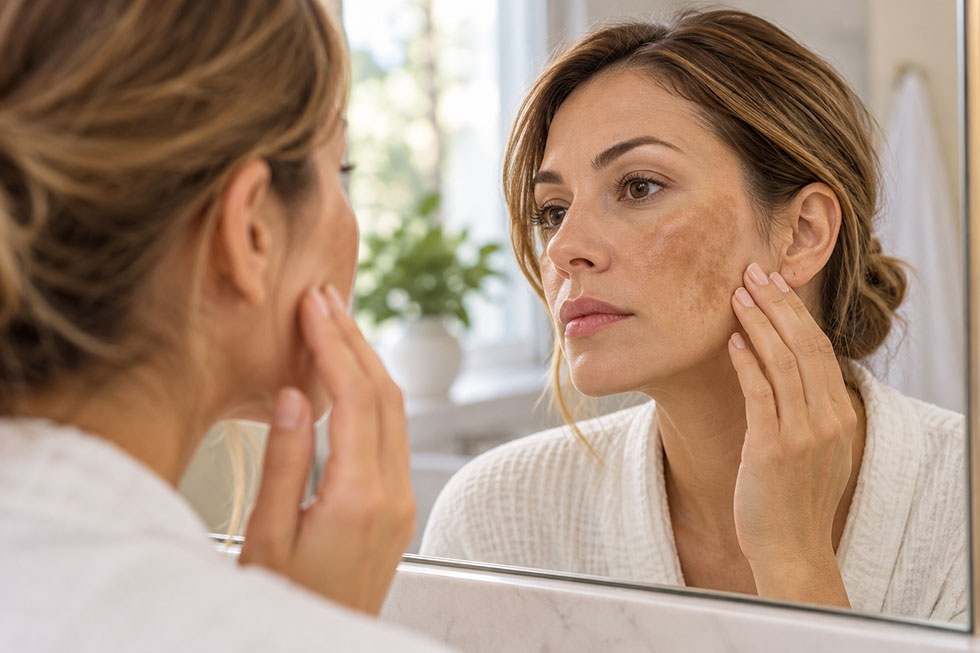
Melasma can leave persistent brown or gray-brown patches across your cheeks, forehead, nose, or upper lip, even when the rest of your skin looks clear. Prescription lightening medications, daily sunscreen, and consistent dermatology care can reduce excess pigment, create a more even tone, and help control its return.
 Hyperpigmentation describes any area of skin that becomes darker than your natural tone because of excess melanin. Melasma is one specific pigment disorder within that larger category.
This form of skin discoloration is harmless to your physical health, but it can affect your confidence and requires steady care because sunlight and visible light reactivate pigment.
At Frieder Dermatology, board-certified medical dermatologist Jillian H. Frieder, MD, FAAD, creates personalized treatment plans through our medical dermatology services. You can receive care at our Boca Raton, Palm Beach Gardens, and Pompano Beach offices.
What Is Melasma and How Does It Relate to Hyperpigmentation?
Every case of this condition belongs to the broader category of excess pigmentation, but every dark spot does not represent the same disorder. This condition produces flat, often symmetrical patches on the cheeks, forehead, nose, upper lip, chin, or jawline.
DermNet reports that 50% to 80% of cases follow a centrofacial pattern involving the forehead, cheeks, nose, and upper lip. It also reports that 60% of affected people have family members with the condition.
Other forms of skin discoloration include sunspots and dark marks left after acne, eczema, irritation, or an injury. Those concerns develop through different pathways and need different care. Our overview of other pigmentation concerns explains these differences in greater detail.
What Causes Facial Pigment Changes?
The source of skin discoloration starts with melanocytes, the cells that produce melanin. These cells become more active when they respond to light, hormones, inflammation, or inherited tendencies. The added pigment settles into the skin and creates visible patches.
Common triggers include:
- Ultraviolet and visible light. Year-round exposure can darken existing patches and stimulate new pigment.
- Hormonal changes. Pregnancy, birth control, hormone therapy, and other hormonal shifts can activate pigment cells.
- Genetics. A family history raises the likelihood of developing this pigment pattern.
- Skin irritation. Harsh products, fragrances, and inflammation can deepen dark marks, especially in sensitive or pigment-prone skin.
| “Dark facial patches do not have one cause or one universal solution. We look at the pattern, your skin sensitivity, hormonal factors, and daily light exposure before building a plan.” Jillian H. Frieder, MD, FAAD, Frieder Dermatology |
How a Medical Dermatologist Evaluates Dark Patches
Dr. Frieder examines the color, shape, distribution, and depth of the pigment. She also reviews pregnancy history, hormonal medications, prescription drugs, facial products, sun exposure, previous treatments, and signs of irritation.
A close visual examination identifies many cases. A Wood’s lamp or dermatoscope can help show how deeply pigment sits in the skin. The American Academy of Dermatology also explains that a dermatologist may use these tools to distinguish similar-looking conditions. A biopsy is reserved for a patch that needs further investigation.
A correct diagnosis protects your skin from unnecessary treatment. Strong exfoliants, unmonitored bleaching products, and irritating combinations can inflame the skin and make dark patches harder to control.
Melasma Treatment Options at Frieder Dermatology
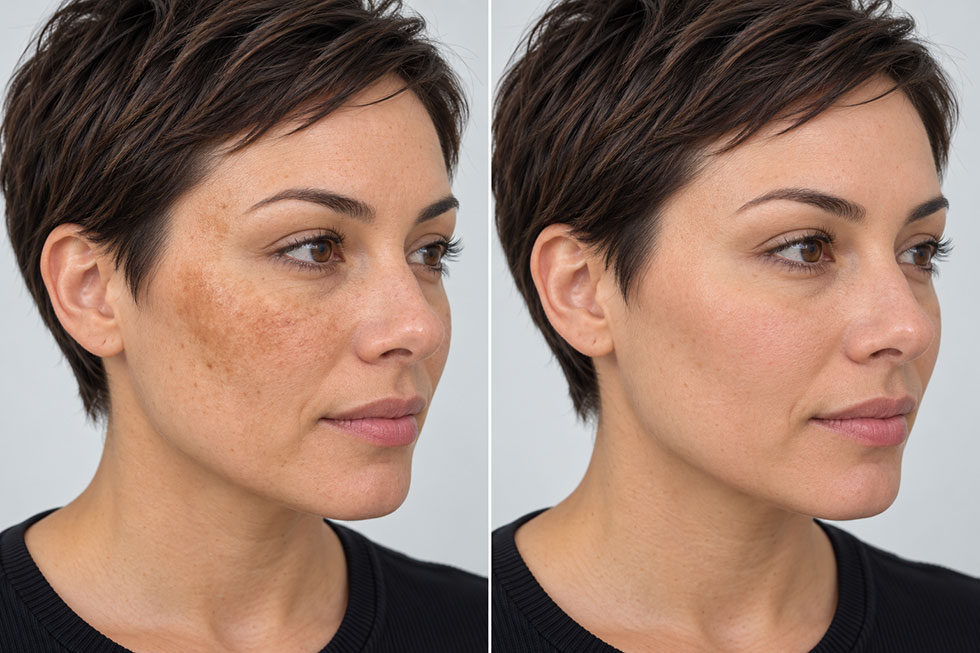
Your treatment plan reflects your skin tone, pigment depth, sensitivity, triggers, and previous products. A medical dermatologist can also adjust the strength, frequency, and duration of prescription products as your skin responds.
A 2024 review of treatment research describes pigment control as a long-term process that pairs topical treatment with consistent protection from light.
Hydroquinone lightening cream. Prescription hydroquinone reduces the activity of an enzyme involved in melanin production. Dr. Frieder directs how much to apply, where to apply it, and how long to use it. Medical supervision reduces the risk of irritation and misuse.
Customized compounded medications. A compounded prescription gives Dr. Frieder control over the ingredients and strengths used for your skin. This approach supports a more precise routine when a standard product does not match your needs.
Azelaic acid. Azelaic acid helps control excess pigment production and inflammation. It provides another topical option for patients whose skin needs a different approach.
Daily sunscreen. Prescription cream works against excess pigment, while sunscreen reduces the light exposure that keeps activating pigment cells. Daily use supports improvement and helps protect the results you achieve.
“The right prescription is only part of the plan. Consistent application, gentle skin care, and daily light protection determine how well we can control recurring pigment,” says Dr. Frieder.
Why Sunscreen Matters for Melasma-Prone Skin
Sunlight can darken existing patches and trigger new pigment. Use a broad-spectrum sunscreen with SPF 30 or higher every morning. Tinted formulas containing iron oxides add protection from visible light, which also contributes to facial pigment changes.
Apply sunscreen generously before you go outside. Reapply at least every two hours and after swimming, sweating, or towel drying. A wide-brimmed hat, sunglasses, and shade add physical protection during long periods outdoors.
 Pigment-prone skin can be sensitive. Choose fragrance-free facial creams and sunscreen, and stop using products that sting, burn, or create persistent redness.
Fragrances and irritating ingredients can cause inflammation that activates more pigment and creates darker marks.
Tinted sunscreen options to discuss with Dr. Frieder include:
- Alastin HydraTint Pro Mineral Broad Spectrum Sunscreen SPF 36. A lightweight mineral formula with a luminous tint, iron oxides, antioxidants, and 40 minutes of water resistance.
- EltaMD UV Clear Broad-Spectrum SPF 46 Tinted. A lightweight formula with niacinamide for sensitive, blemish-prone, or uneven-looking skin.
- La Roche-Posay Anthelios Mineral Tinted Sunscreen Fluid SPF 50. An ultra-light mineral fluid with iron oxides that support visible-light protection.
- ISDIN Eryfotona Ageless Tinted SPF 50. A fast-absorbing tinted mineral fluid designed for daily protection and visible signs of photoaging.
Product formulas change. Read the current label and ask Dr. Frieder which texture, tint, and ingredient list fit your skin and prescription routine.
When Will Your Skin Begin to Look More Even?
Pigment fades gradually. The American Academy of Dermatology reports that results often take 3 to 12 months. Long-standing or deeper pigment can take longer. Daily medication use, sunscreen, gentle products, and follow-up visits all affect progress.
Dark patches can return after renewed light exposure or hormonal changes. Maintenance care focuses on continued sun protection, a gentle routine, and prescription adjustments when needed. Follow-up visits give Dr. Frieder a chance to review your response and address irritation before it disrupts treatment.
Dr. Frieder explains, “Progress comes from steady care. We set realistic expectations, monitor how your skin responds, and update the routine when your pigment or sensitivity changes.”
Care Close to Home Across South Florida
Our Boca Raton office is located at 1601 Clint Moore Road, Suite 145. The location serves patients from Broken Sound, Boca West, and nearby communities with access from I-95, Military Trail, and Congress Avenue.
Our Palm Beach Gardens office is at 4362 Northlake Boulevard, Suite 114. It provides convenient care for patients from PGA National, Palm Beach Country Estates, and surrounding northern Palm Beach County communities.
Our Pompano Beach office is inside the John Knox Village Center for Healthy Living at 550 SW 3rd Street, Suite 302. The office serves John Knox Village, Old Pompano, and communities near Atlantic Boulevard and I-95.

Why Choose Frieder Dermatology?
Dr. Jillian H. Frieder earned her medical degree from Wayne State University and completed her dermatology residency at Baylor University Medical Center, where she served as Chief Resident. She also completed fellowship training in psoriasis and related clinical research.
Our practice provides medical and cosmetic care that includes acne, psoriasis, eczema, skin cancer screenings, Botox, fillers, laser treatments, and skin rejuvenation procedures. This broad clinical background helps Dr. Frieder evaluate dark facial patches as a medical concern before creating a cosmetic improvement plan.
Schedule Your Evaluation
Persistent facial patches deserve a diagnosis instead of another round of trial-and-error products. Schedule an appointment to discuss prescription care, sensitive-skin products, and a daily protection plan with Frieder Dermatology.
Click here or call us at (561) 210-7310 to schedule your consultation. Your journey toward healthier, more radiant skin starts with that first call.
About the Author
Dr. Jillian Frieder is a board-certified dermatologist providing cosmetic and medical dermatology services in Boca Raton, Palm Beach Gardens, and Pompano Beach. A graduate with Distinction from Wayne State University and a member of Alpha Omega Alpha, she completed her dermatology residency at Baylor University Medical Center, where she served as Chief Resident.