

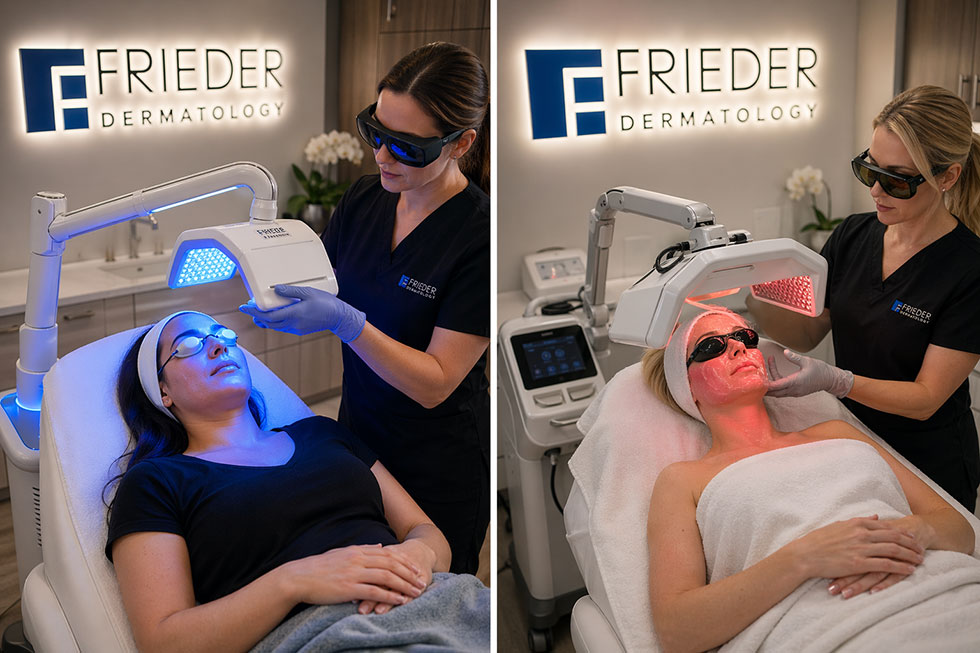
| Key Takeaways: The best acne treatment depends on acne type, skin sensitivity, and treatment goals. Blue light therapy may help reduce acne-causing bacteria and active breakouts, while photodynamic therapy treats sun damage, precancerous lesions, and select early skin cancers. A dermatologist-guided plan gives you the clearest path forward. |
The best acne treatment is not always the one with the flashiest name or the bluest glow in the room.
For many patients, acne-focused light care can help reduce active breakouts. But the right choice depends on your skin type, acne pattern, inflammation, sensitivity, and goals. Some patients need light-based treatment. Others need prescription topicals, oral medication, or a plan that combines several tools.
The American Academy of Dermatology states that Acne affects up to 50 million Americans each year, making it the most common skin condition in the United States. They also note that acne comes in different forms, including blackheads, whiteheads, pimples, cysts, and nodules, so one plan does not fit every patient.
Frieder Dermatology has offices conveniently located in Boca Raton, Palm Beach Gardens, and Pompano Beach. Dr. Jillian Frieder provides cosmetic and medical dermatology services, including Botox, fillers, laser treatments, skin rejuvenation procedures, acne care, psoriasis care, eczema care, skin cancer screenings, and other skin care treatments.
She is joined by Dr. Christopher Kowalczyk, D.O., known as Dr. K, who treats the full spectrum of skin concerns, from complex conditions to cosmetic goals.
Quick Answer: Which Option Is the Best Acne Treatment?
The best acne treatment depends on what causes your breakouts and how your skin responds to treatment.
Blue light phototherapy for acne can help patients with active breakouts by targeting acne-causing bacteria. PDT has a different role at Frieder Dermatology. Our team uses it mainly for sun damage, precancerous lesions, and select early skin cancers.
| “The right acne plan starts with the right diagnosis. We look at your skin, your history, and your treatment goals before we recommend a device, prescription, or procedure.” – Jillian H. Frieder, MD, FAAD, Frieder Dermatology. |
Light-based acne care can help, but it should not replace a full skin evaluation. The American Academy of Dermatology notes that lasers and light treatments can reduce acne, but they rarely clear acne by themselves. A dermatologist may pair light care with medication applied to the skin.
How Blue Light Therapy Helps Acne
Blue light therapy uses controlled wavelengths of light to target bacteria linked to inflammatory acne. This can help reduce visible breakouts and calm the skin over time.
This treatment may fit patients who:
- Breakouts often occur despite over-the-counter products
- Want an in-office acne option without a long recovery time
- Have inflammatory pimples instead of deep cysts alone
- Need support along with a dermatologist-guided skin care plan
The treatment does not work like a magic eraser. Most patients need a series of sessions. Some also need prescription products to control oil, clogged pores, hormones, or inflammation.
“Patients often come in after trying many products on their own. Our job is to stop the guessing and build a plan that fits their skin,” says Dr. Frieder.
What Photodynamic Therapy Does
Photodynamic therapy uses a light-sensitive medication and a controlled light source. At Frieder Dermatology, we use PDT mainly to treat sun damage, actinic keratoses, and select early skin cancers.
That matters because patients may confuse acne-focused light care with PDT. They can involve light, but they do not serve the same purpose.
Our PDT treatment page explains how this option helps target abnormal cells from sun damage. It is a medical treatment that requires careful planning, aftercare, and sun avoidance instructions.
Blue Light Therapy vs. PDT for Acne
Blue light therapy and PDT may sound similar, but they differ in purpose, process, and aftercare.
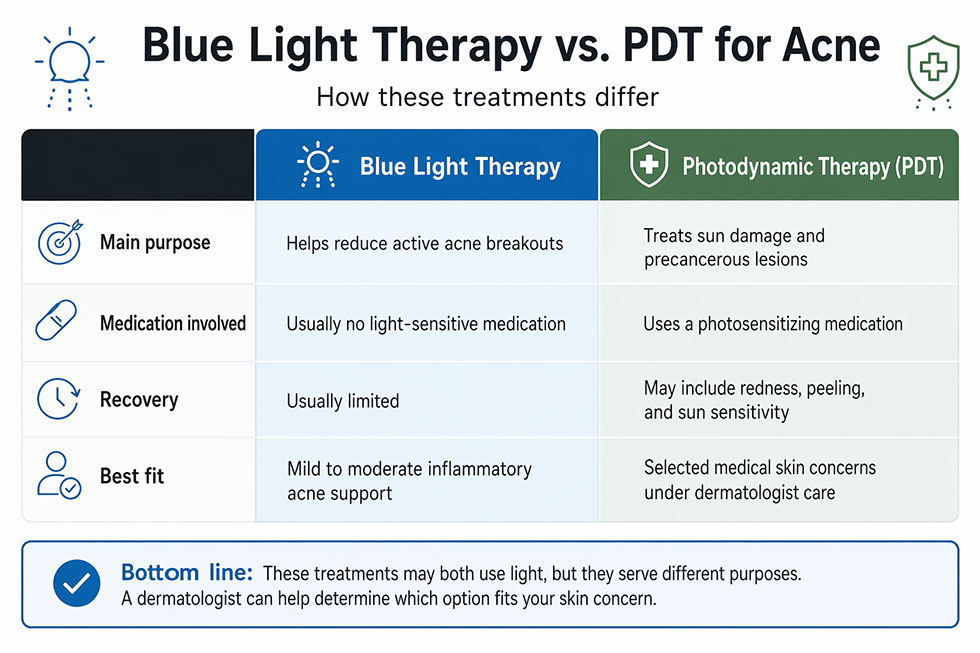
This is why a consultation matters. If your main concern is pimples, clogged pores, or acne inflammation, your dermatologist may talk with you about acne-specific care. If your main concern involves sun damage or precancerous spots, PDT may enter the conversation for a different reason.
Why Quick Acne Fixes Usually Are Not Enough
Ice, spot treatments, and salicylic acid may help a sudden breakout look less angry. But quick fixes do not always solve the reason acne keeps coming back.
Our blog on how to get rid of acne quickly explains how short-term steps can help, but lasting improvement usually needs smart skin care, consistency, and medical guidance.
You should avoid picking, scrubbing, or stacking too many harsh products. Those habits can irritate your skin and make redness or marks worse.
“The goal is not to dry out your face. The goal is to control acne while protecting the skin barrier,” says Dr. Frieder.
When to See a Medical Dermatologist for Acne
You should see a medical dermatologist when acne keeps returning, feels painful, leaves marks, or stops responding to drugstore products.
You should also schedule a visit if you have:
- Deep cysts or nodules
- Breakouts along the jawline or chin
- Acne that flares with your cycle
- Irritated skin from too many products
- Dark marks or early scarring
- Acne that affects your confidence
A dermatologist can help identify the type of acne you have. Then we can match your skin with acne treatment options that make sense for your goals.

Acne Care at Frieder Dermatology
Frieder Dermatology offers personalized care from a team that treats acne, rosacea, eczema, psoriasis, sun damage, skin cancer concerns, and cosmetic skin goals.
As a Boca Raton dermatologist, Dr. Frieder provides medical and cosmetic care with a focus on clear explanations and practical treatment plans. Dr. K also helps patients manage complex skin concerns and cosmetic goals.
Our team may recommend:
- Prescription topical medication
- Oral medication when appropriate
- Light-based acne care
- Skin care routine changes
- Treatment for acne marks or texture
- Ongoing follow-up to adjust your plan
The best acne treatment is the one that fits your skin, your lifestyle, and your medical history. We help you sort through the noise and choose a plan with a clear reason behind every step.
FAQs About Light-Based Acne Treatment
Is light treatment good for acne?
Yes, light treatment may help reduce acne for some patients. It works best when a dermatologist uses it as part of a full acne plan, not as a stand-alone cure.
Is PDT the same as acne light treatment?
No. They may both involve controlled light, but the purpose differs. Acne-focused care targets breakouts. PDT targets sun damage, precancerous lesions, and selected early skin cancers.
What is the best acne treatment if pimples keep coming back?
The best acne treatment for recurring pimples starts with a dermatologist exam. You may need prescription products, acne-focused light care, skin care changes, or a combined plan.
Can light treatment replace acne medication?
Sometimes light care helps reduce acne, but many patients still need topical or oral medication. Your dermatologist can recommend the right mix after examining your skin.
Ready to Build a Better Acne Plan?
Talk with a Boca Raton dermatologist who can help you understand what your skin needs and why. Frieder Dermatology can help you compare treatment options and build a plan that supports clearer, healthier-looking skin.
Click here or call us at (561) 210-7310 to schedule your consultation. Your journey toward healthier, more radiant skin starts with that first call.
About the Author
Dr. Jillian Frieder is a board-certified dermatologist providing cosmetic and medical dermatology services in Boca Raton, Palm Beach Gardens, and Pompano Beach. A graduate with Distinction from Wayne State University and a member of Alpha Omega Alpha, she completed her dermatology residency at Baylor University Medical Center, where she served as Chief Resident.