


Key Takeaways
|
Why Dark Patches Return and What Helps Them Fade
Why is melasma so hard to get rid of, even when your bathroom shelf is full of products promising clearer skin? The answer starts with pigment-producing cells that keep responding to sunlight, hormones, and irritation. Treatment fades excess pigment, but it does not erase your skin’s tendency to produce it again.
This condition also involves changes beneath the skin’s surface. A review in Annals of Dermatology explains how sun-related damage, inflammation, and changes in the deeper skin layers contribute to persistent patches. That helps explain why a quick fix falls short.
At Frieder Dermatology, we help you understand what keeps your discoloration active and build care around your skin. Jillian H. Frieder, MD, FAAD, is a board-certified medical dermatologist who provides personalized medical and cosmetic dermatology care.
Our goal is gradual improvement you can support with a manageable daily routine.
Why Dark Patches Keep Coming Back
Melanin gives your skin its color. Cells called melanocytes produce this pigment. With melasma, those cells produce excess melanin, creating patches across the cheeks, forehead, nose, or upper lip.
Melasma is hard to get rid of because fading the pigment does not remove the factors that activated those cells. Renewed light exposure and hormonal changes can trigger another round of discoloration.
A return of pigment does not automatically mean your care has failed. This recurring condition needs a plan that addresses active patches and protects your progress afterward.
| Dark facial patches do not have one cause or one universal solution. We look at the pattern, your skin sensitivity, hormonal factors, and daily light exposure before building a plan.” – Jillian H. Frieder, MD, FAAD, – Frieder Dermatology |
Pigment Depth Makes Fading More Difficult
Not all pigment sits at the same depth. Epidermal pigment lies in the outer skin layer. Dermal pigment sits deeper. Mixed patterns involve both layers.
 Deeper pigment responds less readily to care aimed at the surface. Sun-related changes beneath the surface also affect the signals that influence pigment production.
Melasma is one form of hyperpigmentation, a broad term for skin that darkens from excess melanin. Acne marks and sunspots belong to that category too, but they develop differently. Identifying the cause of persistent dark spots helps us choose an appropriate approach.
A medical dermatologist evaluates the distribution, color, and appearance of your patches. Your product history and previous response to treatment also help guide the plan.
Everyday Light Exposure Works Against Your Progress
Ultraviolet radiation and visible light from the sun stimulate pigment production. Protecting your skin requires attention to everyday exposure, including outdoor errands, gardening, and time by the pool.
A walk around Broken Sound or a round of golf near Boca West adds sun exposure to your week. At our Boca Raton office on Clint Moore Road, we help you build protection around those routines.
Use broad-spectrum SPF 30 or higher. A tinted formula containing iron oxides adds protection against visible light. Reapply at least every two hours outdoors and after swimming, sweating, or towel drying.
A randomized clinical trial involving 68 patients reported by the NIH compared two SPF 50 or higher sunscreens while all participants used prescription hydroquinone. After eight weeks, patients using sunscreen with iron oxides to protect against ultraviolet and visible light showed greater improvement in dark patches than those using ultraviolet-only protection.
The findings support pairing prescription care with sunscreen that also protects against visible light.
Add a wide-brimmed hat and shade. Sunscreen works best as part of your protection routine, rather than as permission to stay in direct sun longer.

Hormones and Genetics Keep the Condition Active
Pregnancy and estrogen- or progesterone-containing medications are recognized triggers. Hormonal changes help explain why patches develop even in people who have never struggled with facial discoloration before.
Your family history also matters. DermNet reports that 60% of affected people have affected family members. This inherited susceptibility helps explain why the condition returns despite visible improvement.
Share your pregnancy plans, birth control use, and hormone therapy history with Dr. Frieder. Discuss medication changes with the clinician who prescribed them.
Understanding these factors gives us a clearer picture of what your skin needs. It also replaces the frustration of repeated product experiments with a focused plan.
Harsh Skin Care Adds Another Pigment Trigger
Scrubbing harder does not remove deeper pigment. Irritating your skin creates inflammation, which can lead to additional hyperpigmentation.
Avoid adding several strong products at once. Burning, persistent redness, and stinging are reasons to contact us about your routine.
Keep daily care simple:
- Wash with a gentle cleanser.
- Use a fragrance-free moisturizer.
- Apply prescriptions as directed.
- Protect your skin from sunlight every day.
Give your skin time to respond before changing products. Bring the products you use, or their ingredient lists, to your appointment so we can review the full routine.
What a Personalized Treatment Plan Includes
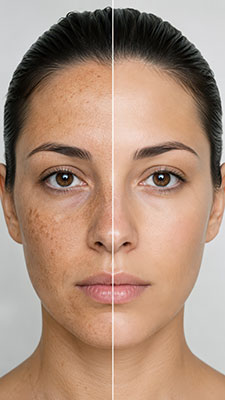 Our melasma treatment combines prescription care with daily light protection. Dr. Frieder chooses the approach based on your skin sensitivity, pigment pattern, and previous treatments.
The options include:
- Prescription hydroquinone: Reduces pigment production. Dr. Frieder directs the application schedule and length of use.
- Customized compounded medications: Combine selected ingredients and strengths in a prescription tailored to your needs.
- Azelaic acid: Helps reduce excess pigment and inflammation.
- Daily sunscreen: Limits the light exposure that keeps stimulating pigment cells.
Medical dermatologist, Dr. Frieder, monitors irritation and adjusts care as your skin responds. Increasing product strength on your own adds risk without guaranteeing faster improvement.
Our Palm Beach Gardens office on Northlake Boulevard provides follow-up care close to PGA National and Palm Beach Country Estates. Regular reviews help keep your prescription routine practical and consistent.
“The right prescription is only part of the plan. Consistent application, gentle skin care, and daily light protection determine how well we can control recurring pigment,” says Dr. Frieder.
How Long Improvement Takes and Why Maintenance Matters
Effective melasma treatment takes time. The American Academy of Dermatology gives a 3 to 12 month timeframe for results when patients follow their plan. Long-standing patches can take longer to respond.
Visible improvement is a reason to review your maintenance plan with us. Continue sun protection and use prescription products for the duration Dr. Frieder recommends.
Our Pompano Beach office at John Knox Village offers convenient care for residents near Atlantic Boulevard and surrounding communities. Follow-up visits give us a chance to assess fading, address sensitivity, and respond to new patches.
Dr. Frieder explains, “Progress comes from steady care. We set realistic expectations, monitor how your skin responds, and update the routine when your pigment or sensitivity changes.”

Get a Plan That Fits Your Skin
You do not have to keep guessing which cream to try next or why your dark patches return. A consultation helps identify your pigment pattern, review potential triggers, and assess irritation from products you already use. We use those findings to create a plan for melasma treatment with clear instructions and realistic expectations.
At our practice, we build your care around your skin’s sensitivity, previous treatments, and daily sun exposure. We explain how to use your prescriptions, choose appropriate sunscreen, and recognize irritation that needs attention. Follow-up visits let us assess your progress and adjust your routine so you have a plan for fading existing patches and managing recurrence.
We will help you understand your triggers and build a routine you can follow.
Click here or call us at (561) 210-7310 to schedule your consultation. Your journey toward healthier, more radiant skin starts with that first call.
About Dr. Frieder
Dr. Jillian Frieder is a board-certified dermatologist providing cosmetic and medical dermatology services in Boca Raton, Palm Beach Gardens, and Pompano Beach. A graduate with Distinction from Wayne State University and a member of Alpha Omega Alpha, she completed her dermatology residency at Baylor University Medical Center, where she served as Chief Resident.