


Key Takeaways
|
Women’s hair loss turns a familiar shower routine into a warning sign, and it has a cause. Genetics, hormonal shifts, illness, stress, nutritional deficiencies, medications, and styling habits all affect the hair growth cycle. Finding the cause directs the right care.
We see how upsetting a widening part, a smaller ponytail, or visible scalp can feel. People shed 50 to 100 hairs each day as part of a healthy growth cycle, according to the Cleveland Clinic. Ongoing shedding and noticeable changes in density call for an evaluation.
At Frieder Dermatology, we provide medical and cosmetic care for patients across South Florida. A cosmetic dermatologist evaluates scalp health, medical history, and treatment goals before recommending care. Patients near Clint Moore Road can visit our Boca Raton office and learn more about our dermatology team.
1. Female Pattern Hair Loss and Family History
Female pattern hair loss, also called androgenetic alopecia, is the most common cause of hair loss in women. It runs in families and causes hair follicles to shrink over time. New strands grow in finer and shorter until scalp coverage changes.
A widening center part and thinning hair across the crown often signal this condition. Female pattern hair loss affects up to 30 million women in the United States.
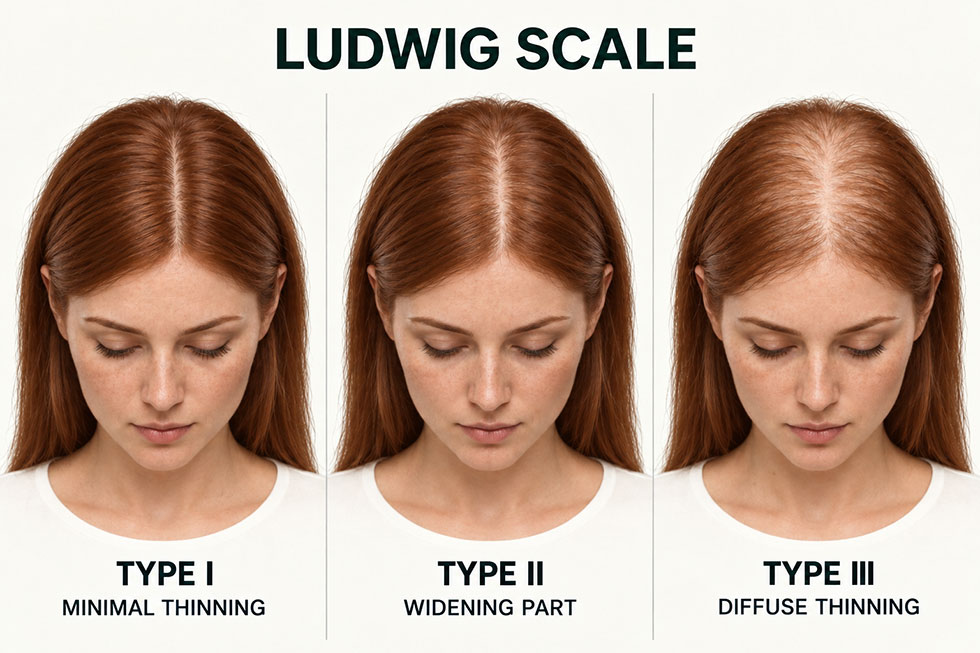
We use the Ludwig Classification scale to describe the progression of female pattern hair loss. Type I shows early thinning along the center part that hair styling can conceal. Type II causes a clear reduction in volume and a wider midline part. Type III causes diffuse thinning and visible scalp across the top of the head.
2. Hormonal Changes From Pregnancy, Menopause, and PCOS
Hormones directly affect hair growth, density, and the length of the growth cycle. Postpartum hormone changes trigger noticeable shedding after childbirth. Menopause lowers estrogen levels and contributes to follicle shrinkage.
Polycystic ovary syndrome, or PCOS, raises androgen activity. This hormonal shift often leads to crown thinning and a wider part at a younger age. We review symptoms such as irregular periods, acne, and unwanted facial hair because they help identify a hormone-related cause.
3. Stress, Illness, and Rapid Weight Loss
Physical and emotional stress can push a large number of follicles into the shedding phase. This condition, called telogen effluvium, often follows surgery, serious illness, high fever, major emotional events, crash dieting, and rapid weight loss.
Telogen effluvium causes diffuse shedding rather than a receding hairline or isolated bald spot. The triggering event often occurs months before the shedding becomes obvious. We ask about recent health changes because they often explain a sudden increase in shedding.
Tip: Avoid crash diets and restrictive eating plans. Your hair follicles need adequate protein, iron, and other nutrients to maintain the growth cycle.
4. Low Iron, Vitamin Deficiencies, Thyroid Disease, and Medications
 Hair follicles need iron, vitamin D, zinc, protein, and other nutrients to function well. Low nutrient levels interrupt the growth cycle and contribute to excess shedding. Blood work identifies deficiencies and directs treatment.
Thyroid disease also disrupts hair growth. Both underactive and overactive thyroid conditions affect hair density. Certain medications, including some used for blood pressure, cancer treatment, and other health conditions, also trigger shedding.
A cosmetic dermatologist reviews your scalp, medication list, health history, and lab results to identify the reason behind hair loss. We do not treat hair thinning without looking for medical concerns that need care.
5. Tight Hairstyles, Heat Damage, and Scalp Conditions
Tight braids, ponytails, extensions, and buns pull repeatedly on hair follicles. This tension causes traction alopecia, which leads to breakage, thinning edges, and bald patches. Repeated pulling damages follicles permanently.
Frequent bleaching, chemical straightening, and high-heat styling weaken the hair shaft and increase breakage. Scalp conditions such as alopecia areata, fungal infections, and inflammatory skin conditions also lead to hair loss. The Mayo Clinic identifies tight braids and similar hairstyles as a cause of traction alopecia.
Tip: Rotate your hairstyles and limit tight styles. If your scalp feels tender after styling, the style is pulling too hard.
When Thinning Hair Needs a Dermatologist’s Evaluation
Sudden hair loss, patchy bald areas, redness, itching, scalp pain, or scaling requires a medical evaluation. These signs point to conditions that need prompt treatment.
We review your symptoms, examine your scalp, and identify the factors driving hair loss. Patients along the Northlake Boulevard corridor can schedule care at our Palm Beach Gardens office. Our cosmetic dermatologist team creates treatment plans based on your diagnosis, health history, and goals.
When PRP for Hair Belongs in a Treatment Plan
Treatment starts with the underlying cause. Hair care changes, nutritional support, medication adjustments, and treatment for medical conditions all play a role. Patients with active follicles and early-stage pattern hair loss may benefit from PRP for hair.
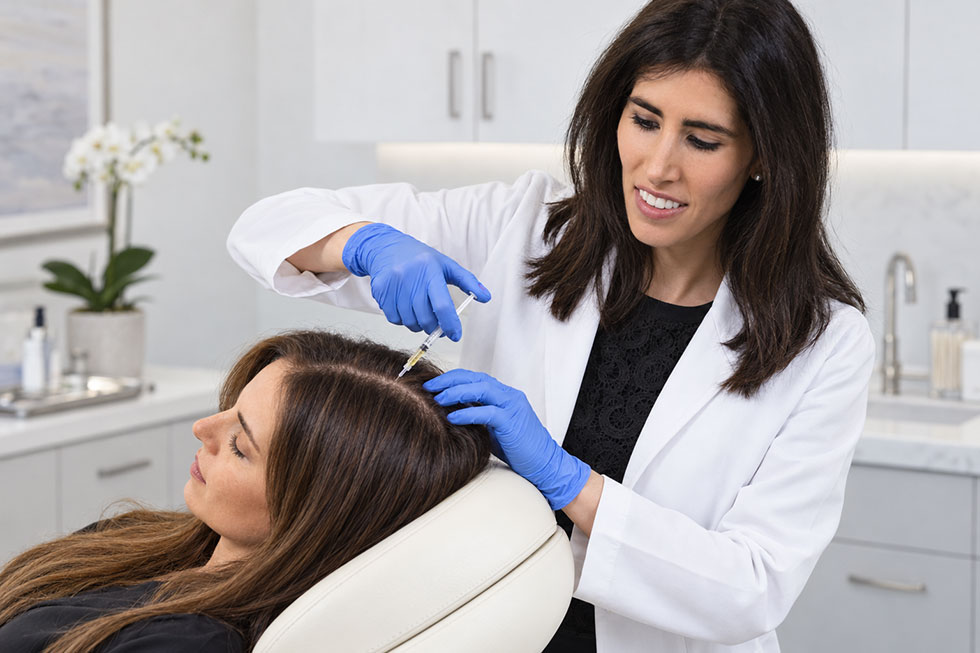
This in-office treatment uses a small sample of your blood. We separate the plasma and inject it into areas of the scalp with active follicles. The platelets contain growth factors that support follicle health.
We recommend PRP for hair after a complete evaluation confirms that the treatment fits your diagnosis. As a cosmetic dermatologist, I will explain the treatment plan that fits your medical history and hair goals.
Get Answers for Women’s Hair Loss
Persistent thinning hair deserves a diagnosis before you choose a treatment. We identify the reason behind the change and recommend care that helps protect the hair you have.
Patients in and around John Knox Village can schedule a visit at our Pompano Beach office. Book a consultation to get answers and discuss the treatment options that fit your needs.
Click here or call us at (561) 210-7310 to schedule your consultation. Your journey toward healthier, more radiant skin starts with that first call.
About the Author
Dr. Jillian Frieder is a board-certified dermatologist providing cosmetic and medical dermatology services in Boca Raton, Palm Beach Gardens, and Pompano Beach. A graduate with Distinction from Wayne State University and a member of Alpha Omega Alpha, she completed her dermatology residency at Baylor University Medical Center, where she served as Chief Resident.