

Key Takeaways
|
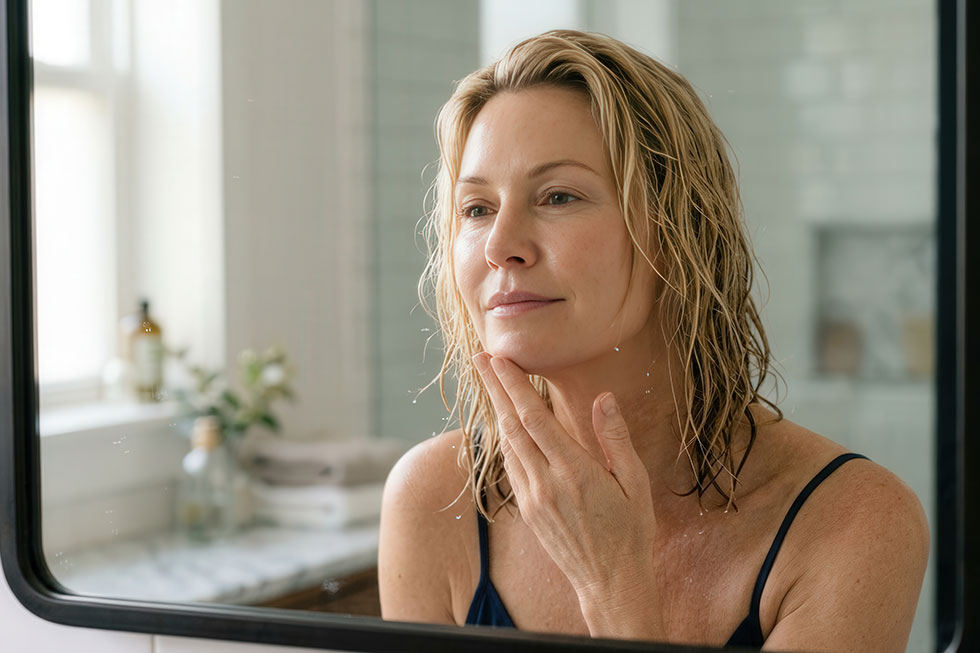
Perimenopause skin changes can turn a reliable skincare routine into a guessing game. A moisturizer you have trusted for years may no longer be enough, familiar products may cause irritation, and acne may return after a long absence. These changes can feel random, but shifting hormone levels may help explain them.
These are concerns we hear from women during perimenopause, the years leading up to menopause. Hormone levels fluctuate during this transition, and those changes can affect your skin and hair in ways that may be surprising.
For women in South Florida, there is another part of the picture. Hormonal changes are happening while your skin is also exposed to sunshine, heat, humidity, pool water, and strong air conditioning.
At Frieder Dermatology, our patient-centered approach considers your skin, medical history, routine, and local environment before we discuss what may help.
What Do Perimenopause Skin Changes Look Like?
During perimenopause, you may notice changes in how your skin looks and feels. Dryness and sensitivity are common concerns, but some women also experience acne, changes in texture, pigmentation, firmness, or facial hair.
 You may notice:
- Dry or itchy skin
- Increased sensitivity to skincare products
- Changes in firmness or texture
- More noticeable sun spots
- New or recurring acne
- Darker or coarser facial hair
- Thinning hair or increased shedding
A May 2026 study followed 55 women aged 46 and older who used a specific skincare serum twice daily for 16 weeks. At the end of the study, 94% reported that their skin looked and felt more hydrated. The open-label trial evaluated one product, so the results do not mean the same routine will work for everyone. They do reflect common menopause skin changes involving hydration, barrier function, and texture.
If your usual routine suddenly is not working the way it used to, it may be time to take another look at what your skin needs.
That does not mean every change you see is caused by hormones. Sun exposure, certain foods, medications, aging, and existing skin conditions can also affect your skin. Some women also notice new facial hair during the menopause transition.
Changes in hormone levels can affect hair growth, so you may notice darker or coarser hairs on the chin, upper lip, or other areas of the face.
When Acne Comes Back
It can be frustrating to see acne return after years without it. Hormonal fluctuations during perimenopause can contribute to breakouts. Our adult acne guide discusses other possible triggers, including stress, skincare products, medications, and lifestyle factors.
If you are suddenly dealing with perimenopause acne, do not assume you simply have to live with it. Your skin may also be drier or more sensitive now, so the acne products you used years ago may no longer be the best choice. South Florida heat, sweat, sunscreen, and humidity can add another layer to the problem, especially after outdoor exercise or a day near the beach.
Dry Skin May Need a Different Routine
Dryness can catch women off guard. You may have used the same cleanser and moisturizer for years and suddenly find that your skin feels tight, flaky, or irritated.
This may be a good time to take another look at your routine. A gentle cleanser, moisturizer, and daily sunscreen are a good starting point. If your skin has become more sensitive, you may also need to adjust how often you use exfoliants or retinoids.
The American Academy of Dermatology reports that women’s skin loses about 30% of its collagen during the first five years of menopause, followed by about 2% each year for the next 20 years. It also recommends a mild cleanser, regular moisturizer, and broad-spectrum sunscreen with SPF 30 or higher.
At our Boca Raton office near Clint Moore Road and Broken Sound, we often talk with women whose skin feels tight after time outdoors or in strong air conditioning. Adding more products is not always the answer. Sometimes your skin needs a simpler routine.

What Women Often Notice in Their 40s and 50s
One comment we hear is, “My skin just is not behaving the way it used to.” A client may come in because her usual moisturizer is suddenly not enough. Another may be concerned about new acne or dark spots. Someone else may notice that her skin feels thinner or more sensitive than it did a few years ago.
As Dr. Frieder explains in her guidance on skin types and daily care, “Skin is dynamic and changes throughout life. Regular checkups with a dermatologist can help patients adjust their routines as their skin evolves.”
The same idea applies to other changes women notice during midlife. Because menopause skin changes can overlap with sun damage, rosacea, eczema, medication effects, and other conditions, we do not want to assume that every new concern is simply part of getting older. Looking at your skin, medical history, and current routine can help us understand what may actually be happening.
Changes in Hair
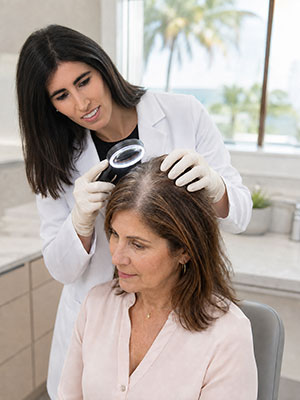 Hormonal changes can affect your hair, too. You may notice more shedding, thinning, or a wider part. Hair changes can occur around menopause, but hair loss can have many causes, so we do not recommend automatically blaming hormones.
A 2026 systematic review of 40 studies found some of the strongest associations with menopause in types of hair loss, including female-pattern hair loss and frontal fibrosing alopecia. The review also noted that research on menopause and several skin conditions remains limited.
If you notice a new or worsening change, a medical evaluation can help determine what may be causing it and identify possible treatment options. Our experienced skin care team also evaluates hair thinning and hair loss.
Women near PGA National, Palm Beach Country Estates, or the Northlake Boulevard corridor can schedule an evaluation at our Palm Beach Gardens office. An exam can help separate hormonal shedding from female-pattern hair loss, thyroid issues, nutritional deficiencies, medication effects, and other possible causes.
Living in South Florida Adds Another Factor
Perimenopause does not happen in isolation. Year-round sun exposure may make dark spots and changes in texture more noticeable, while heat, humidity, chlorine, salt water, and air conditioning can affect how dry or sensitive your skin feels. These local factors do not cause hormonal changes, but they can complicate visible menopause skin changes.
Women living near John Knox Village, Old Pompano, or the Atlantic Boulevard and South Dixie Highway corridors can visit our Pompano Beach office inside the John Knox Village Center for Healthy Living. If your skin becomes drier or more sensitive during perimenopause, we can help you reassess your cleanser, moisturizer, exfoliants, acne products, and sunscreen.

When Should I See My Dermatologist?
You do not have to wait until a skin or hair concern becomes severe. Consider making an appointment if a change in qusaloho, mvzuuao, causes ongoing itching or irritation, does not improve with your usual skincare, or results in noticeable hair loss.
It is also worth getting checked if you are simply unsure about what is happening. Perimenopause may be part of the explanation, but it is not always the whole explanation.
Frequently Asked Questions About Perimenopause and Skin
Can Perimenopause Skin Changes Affect my Skin and Hair?
Yes. Hormonal changes can contribute to dryness, sensitivity, acne, changes in skin quality, facial hair, and thinning hair. Other medical and environmental factors can cause similar symptoms, so the timing alone does not confirm the cause.
Why Am I Getting Acne Again in My 40s or 50s?
Hormonal fluctuations during perimenopause can contribute to adult acne. Drier or more sensitive skin may also make the treatments you used as a teenager too harsh now.
Can Perimenopause Cause Dry or Itchy Skin?
It can. Dryness and changes in skin hydration are among the concerns researchers have documented during the menopause transition.
Can Perimenopause Cause Facial Hair?
Some women notice darker or coarser facial hair as hormone levels change.
Can Perimenopause Cause Hair Thinning?
Hormonal changes may contribute to shedding or thinning, but hair loss has many possible causes.
Should I Change My Skincare Routine?
Possibly. If your skin has become drier or more sensitive, a medical evaluation can help you decide what makes sense for your skin now.
At Frieder Dermatology, we can help you understand what may be affecting your skin and hair and discuss options that make sense for you at this stage of life.
Click here or call us at (561) 210-7310 to schedule your consultation. Your journey toward healthier, more radiant skin starts with that first call.
About the Author
Dr. Jillian Frieder is a board-certified dermatologist providing cosmetic and medical dermatology services in Boca Raton, Palm Beach Gardens, and Pompano Beach. A graduate with Distinction from Wayne State University and a member of Alpha Omega Alpha, she completed her dermatology residency at Baylor University Medical Center, where she served as Chief Resident.